 by
by 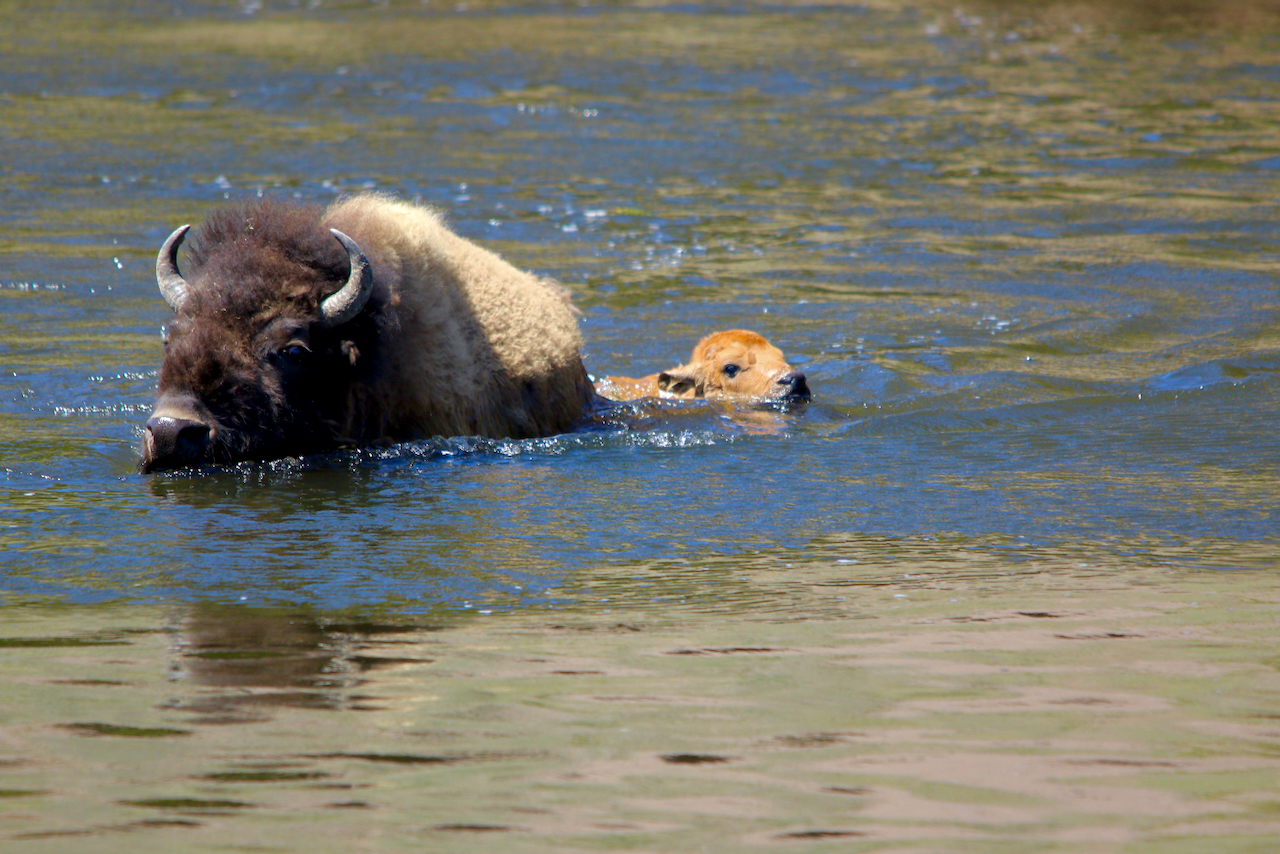
This week in Yellowstone National Park, from May 14th to May 20th, 2026, I will talk about seeing bears, discuss what to expect from gateway towns this week, and give a history of Tower Fall. I will also give you the complete weather forecast, a cool trail to hike, the snowpack update, the wildlife report, and everything else you need to have an incredible time, “This Week in Yellowstone.”
LISTEN TO THIS AS A PODCAST
The text below is my notes for the podcast. They may be incomplete.
Apple: https://podcasts.apple.com/us/podcast/this-week-in-yellowstone-national-park/id1789397931
Spotify: https://open.spotify.com/show/41E5WWldz4s7n6NXh2Lahr
RSS: https://rss.com/podcasts/this-week-in-yellowstone-national-park/
Disclaimer: I may miss a few details, so please feel free to reach out with any questions. I also mention park locations casually. If you’re unfamiliar, a quick search can help. This report only covers drivable areas of the park.
Also, this podcast is a passion project. If you enjoy it, I’d love a review or a quick email! To support my work, check out my hiking and wildlife-watching guidebooks, or join me for a guided hiking tour in Yellowstone’s backcountry. For more information, visit outdoor-society.com or contact me directly. Seriously though, come book a trail tour with me.
EXPERIENCE OF THE WEEK
Bears, Bears, Bears
Many people don’t often repeat the same word three times. When one does, it is usually to refer to the band Toni Tony Tone or sing along to a Motley Crue song Girls Girls Girls. One word is usually enough. However, this week, I am doing what you shouldn’t do with the word beatleguise and repeating myself thrice.
This time of the year in Yellowstone is the best time of the year to see bears, and I will challenge anyone on this. My dad visited the park with me this last week, for about three total days of park time. In that visit, we saw 26 bears, 21 of them were unique bears, and six of them were grizzlies. Now, this is obviously a lot, and I do not expect anyone to think this is the norm. That being said, I had a friend drive into the park on Saturday for a hike, not looking for bears, and they saw six bears that day while driving. My dad and I also weren’t solely focused on trying to see bears. Most of the sightings just sort of happened.
How did we get so lucky? We woke up around 6, and drove into the park by 630 or 7 am every day. We saw grizzlies between Mammoth and Norris, Norris and Canyon, and between Canyon and Lake. We saw grizzlies and black bears between Mammoth and Roosevelt, including the road to the petrified tree, and also Roosevelt and Tower, and Roosevelt and Soda Butte. Some were near the road, some were far away. On the 4/30 to 5/06 episode of the podcast, I talked about the Bearmuda Triangle, which was insanely good for bear sightings this last trip. Do yourself a favor and give that a listen, if you haven’t.
Again, I must stress that my experience is not necessarily the norm. I chatted with some staff in the park who drove around before or after work, and have yet to see a bear. Sometimes, the luck of Yellowstone is in your favor; sometimes, it isn’t. The best thing you can do is try, and try often. Eventually, your luck should turn.
Quick time to mention that this episode of the podcast is sponsored by legalized gambling: You have to win eventually, right? So give us your money now!
I hope it is obvious that I am kidding. I have no sponsors and would not let any of those sites sponsor me. But the part before, about trying again and again, is true. Especially before 10 am and after 5 pm. Those tend to be the best times, as of late, but it isn’t a steadfast rule. Go when you can.
So why are bears so prevalent this time of the year? The answer is simple: Bears are especially easy to see in Yellowstone during May because they have recently emerged from dens and are actively searching for food in lower-elevation areas. Early spring conditions typically keep much of the high country covered in snow, so both grizzly and black bears spend more time in open valleys, meadows, and roadside areas where new grasses, roots, winter-killed animals, and elk/bison calves are available. These same lower elevations are also where most park roads run, which increases the chances of visitors spotting bears.
May is also the beginning of the calving season, and bears are often drawn to areas where newborn calves are present. According to the National Park Service, bear activity increases significantly in spring as they work to regain weight lost during torpor. Yellowstone Forever says that wildlife biologists with Yellowstone National Park note that spring provides some of the best bear viewing opportunities of the entire year because vegetation is still relatively short, making bears easier to spot across open landscapes. Cooler temperatures also encourage daytime activity, unlike midsummer when bears are more active during early morning or evening hours.
TIP OF THE WEEK
What to Expect in Gateway Towns This Week
I honestly just talked and didn’t write anything. Sorry!
RANDOM YELLOWSTONE FACT OF THE WEEK
The History of Tower Fall in Yellowstone National Park
If you’ve ever driven through the northeastern part of Yellowstone National Park, there’s a good chance you’ve stopped at Tower Fall. The waterfall drops 132 feet into a rugged canyon, surrounded by sharp volcanic rock spires that look almost like castle towers. It’s one of the park’s most recognizable sights, though what makes Tower Fall especially interesting is that its story goes far beyond scenery. The falls tell a story about volcanoes, glaciers, Native history, exploration, art, and even the creation of Yellowstone National Park itself.
Like much of Yellowstone, Tower Fall exists because of volcanic activity. Yellowstone sits on top of one of the largest volcanic systems in the world, called the Yellowstone Plateau Volcanic Field. Over millions of years, huge eruptions, lava flows, earthquakes, glaciers, and erosion all helped shape the landscape visitors see today.
The tall rock “towers” beside the waterfall are actually volcanic formations made mostly of hardened lava rock and volcanic breccia. Long ago, lava cooled into thick rock layers. Over time, water, freezing temperatures, and erosion slowly wore away the softer material around them. The harder rock stayed behind, creating the narrow stone pinnacles that give Tower Fall its name.
You can also see evidence of ancient lava flows in the cliffs around the falls. Some areas contain columnar basalt, which forms when lava cools and cracks into vertical columns. Later, glaciers moved through the Yellowstone region during the Ice Ages, carving valleys and exposing even more of the volcanic rock underneath. Eventually, Tower Creek cut its way through the landscape and created the dramatic waterfall we see today.
Long before Yellowstone became a national park, Native American peoples traveled through and lived in this area for thousands of years. Archaeologists have found evidence of human activity in Yellowstone dating back more than 11,000 years.
The region around Tower Fall and the Yellowstone River was important to many Indigenous groups, including the Bannock, Crow, Shoshone, and Blackfeet. These communities used the area for hunting, travel, trade, and gathering resources. Nearby Bannock Ford along the Yellowstone River became an important crossing point for travelers moving through the region.
Yellowstone also contained valuable obsidian deposits. Obsidian is a volcanic glass that Indigenous peoples used to make sharp tools and weapons. In many ways, Tower Fall was part of a much larger cultural landscape long before tourists ever arrived.
Tower Fall entered written American history during the exploration of Yellowstone in the late 1800s. In 1869, members of the Cook-Folsom-Peterson Expedition visited the area while exploring the Yellowstone River headwaters. A year later, the better-known Washburn-Langford-Doane Expedition camped nearby and described the falls in detail.
The waterfall got its name from Samuel Hauser, one of the expedition members, who thought the rock pinnacles beside the falls looked like towers. Originally, the site was called “Tower Falls.” In 1928, the U.S. Geological Survey officially changed the name to the singular “Tower Fall.”
Early explorers were amazed by the place. At the time, few Americans had ever seen landscapes like Yellowstone’s volcanic canyons and waterfalls. Tower Fall quickly became one of the region’s most memorable natural landmarks.
Tower Fall played an important role in the creation of Yellowstone National Park. In 1871, artist Thomas Moran and photographer William Henry Jackson visited Yellowstone with the Hayden Geological Survey. Their job was to document the region’s landscapes.
Moran created a famous painting of Tower Fall, while Jackson photographed the area. Back east, many people still doubted stories about Yellowstone’s geysers, waterfalls, and dramatic scenery. Moran’s paintings and Jackson’s photographs gave Congress some of the first convincing visual evidence of how extraordinary the region really was.
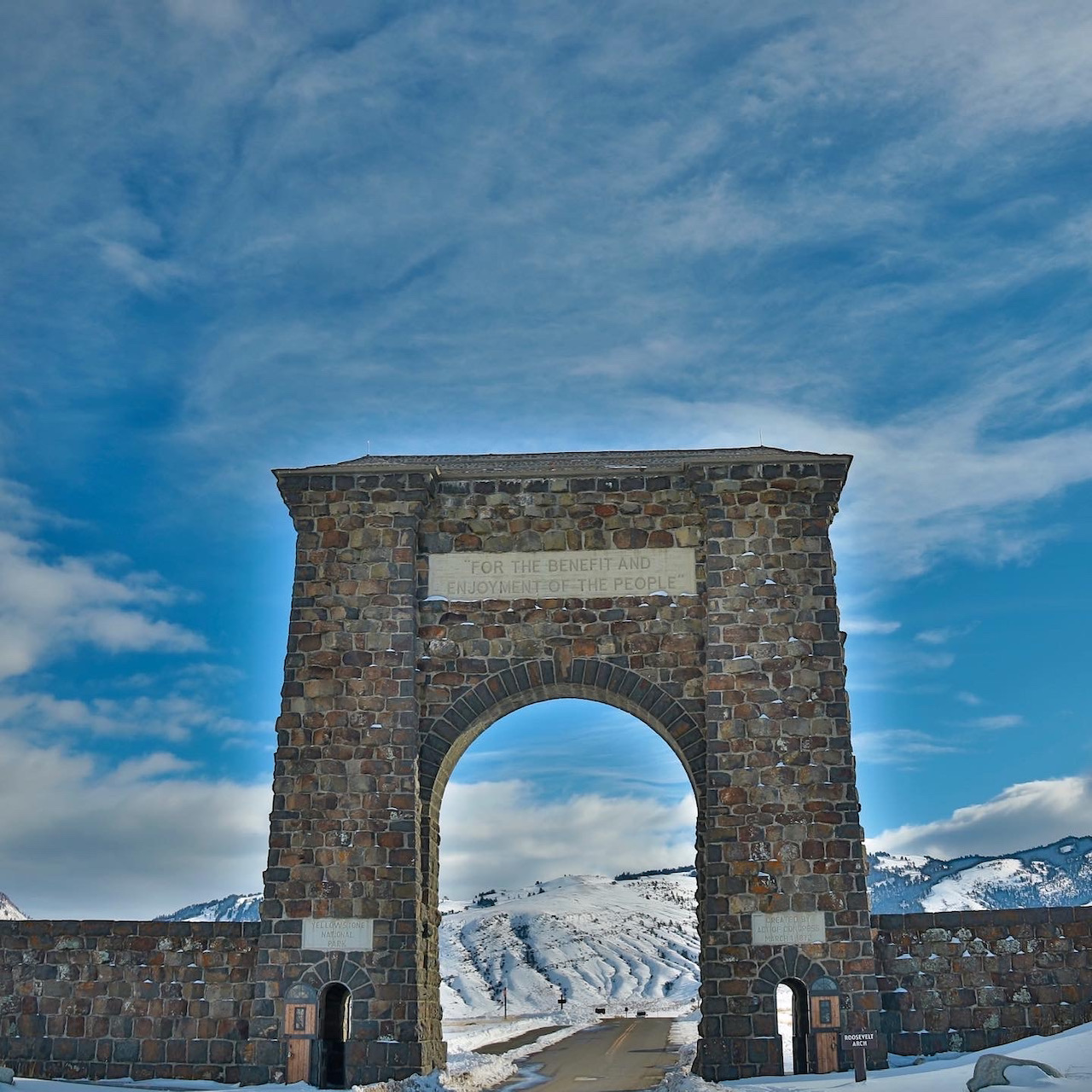
Those images helped build support for protecting Yellowstone, and in 1872, Congress established Yellowstone as the world’s first national park. Because of that, Tower Fall is connected directly to the beginning of the national park movement in the United States.
As Yellowstone became more popular in the late nineteenth and early twentieth centuries, Tower Fall turned into one of the park’s major tourist stops. Roads, overlooks, trails, and the nearby Tower Fall General Store made the waterfall easy for visitors to access.
For many years, one of the most famous features near the falls was a giant boulder balanced close to the edge of the cliff. It looked as though it might fall at any moment. In June 1986, it finally did, crashing into the canyon below and permanently changing the appearance of the waterfall.
The area has also experienced erosion and landslides over time. A steep trail once allowed visitors to hike to the bottom of the falls, though the trail became increasingly unstable. Because of safety concerns, Yellowstone permanently closed access to the base of Tower Fall in 2004. Today, visitors mainly view the waterfall from overlooks near the parking area.
Today, Tower Fall remains one of Yellowstone’s most photographed waterfalls. What makes it special is how many different stories come together in one place. The falls reveal Yellowstone’s volcanic past, its glacial history, and the power of erosion. They also reflect thousands of years of Indigenous history and an important chapter in American conservation.
The landscape around Tower Fall is still changing slowly as erosion continues to shape the canyon and rock formations. In that sense, the waterfall is not just a historic landmark. It is part of a living landscape that continues to evolve, just as it has for millions of years.
WEATHER FOR THE COMING WEEK
I am too lazy to type it all out, so you’ll have to listen to the podcast to get the weather forecast, or just contact me.
Apple: https://podcasts.apple.com/us/podcast/this-week-in-yellowstone-national-park/id1789397931
Spotify: https://open.spotify.com/show/41E5WWldz4s7n6NXh2Lahr
RSS: https://rss.com/podcasts/this-week-in-yellowstone-national-park/
SNOWPACK UPDATE
As of May 13th, the snowpack is around 65% of normal for this time of year. The eastern and northern ranges of the park are 73% of normal, while the western and southern sides are 50% of normal. Last year on this date, we were averaging around 73% of our normal level for the whole park.
ROADS CONDITIONS
The only road closed in the park right now is the road over Dunraven Pass, connecting Canyon to Tower. While unlikely, be aware that this road can close at any time due to inclement weather.
For up-to-date information, call (307) 344-2117 for recorded information, or sign up to receive Yellowstone road alerts on your mobile phone by texting “82190” to 888-777.
CAMPING INFO
Mammoth is open, Madison is open, and Fishing Bridge is open. Bridge Bay opens on the 15th of May.
WILDLIFE WATCHING UPDATE
You have to listen to the podcast to get this information. Sorry.
Apple: https://podcasts.apple.com/us/podcast/this-week-in-yellowstone-national-park/id1789397931
Spotify: https://open.spotify.com/show/41E5WWldz4s7n6NXh2Lahr
RSS: https://rss.com/podcasts/this-week-in-yellowstone-national-park/
PICK UP A GUIDEBOOK
Love what you have heard on this podcast and want more information on wildlife watching? Get a copy of my wildlife-watching guidebook to the region! Available in both ebook and paperback formats, my book will help you spot wildlife like a seasoned local. Please consider buying a book directly from me, as I make next to nothing when they are sold on Amazon. Grab your copy now at outdoor-society.com!
TRAIL ALERTS AND UPDATES
The backcountry Conditions Page is updated! I have a link to it in the show notes. That site is the easiest way to check the status of a trail you want to hike. The area around Fairy Falls, Imperial Geyser, Queen’s Laundry, and all of that is closed until further notice. Carry bear spray. Have it readily accessible and not in a backpack. Know how to use it.
TREK OF THE WEEK
Lone Star
The Lone Star Geyser Trail in Yellowstone National Park is a relaxing and scenic hike that leads to one of the park’s more off-the-beaten-path geysers. Tucked away just south of the often-busy Old Faithful area, the trail starts at the Kepler Cascades parking area on the Grand Loop Road. It’s a 4.8-mile round-trip hike on a wide, gently rolling path that follows an old service road through quiet lodgepole pine forest alongside the Firehole River. The route is easy to moderate and great for most hikers, including families, thanks to the relatively flat terrain. It’s also open to bicycles (up to the geyser), and the even surface makes it doable for sturdy strollers, too.
What’s especially nice about this trail is that it offers an alternative starting point if you’re staying near Old Faithful. A connector path near the Old Faithful Lodge or Visitor Center leads to the main Lone Star Geyser trail, adding a bit of distance but giving you the option to walk right from the heart of one of Yellowstone’s most iconic areas. It’s a fun way to escape the crowds and get into a quieter corner of the park without needing to hop in the car.
As you walk, you’ll hear the steady flow of the river and may spot elk, bison, or a variety of birds along the way. In summer, wildflowers often brighten the trail with pops of color. While bear encounters are rare, they are possible, so carry bear spray and know how to use it. Along the hike, you’ll also pass a few small thermal features as you go, subtle hints of the geyser waiting at the end.
After about 2.4 miles, the trail opens into a peaceful clearing where Lone Star Geyser sits, framed by forest and bubbling quietly between eruptions. The geyser itself is a striking, cream-colored cone about 10 feet tall. It erupts roughly every three hours, shooting water and steam 30 to 50 feet into the air for up to 30 minutes. Because it’s so much more remote than places like Old Faithful, you might find yourself sharing the moment with just a few other people, or no one at all. There’s usually a logbook nearby where visitors note the last eruption time, which can help you decide if it’s worth hanging around. Spoiler alert, it is.
There are no restrooms, water stations, or facilities on this trail, so be sure to pack everything you need: water, snacks, sunscreen, and a camera or binoculars if you like spotting wildlife. The trail is best from late spring through fall, when it’s dry and clear. In winter, it becomes a popular cross-country ski route. Like most backcountry trails in the park, dogs aren’t allowed here.
Whether you start at Kepler Cascades or connect from Old Faithful, the Lone Star Geyser Trail offers a peaceful, rewarding escape into nature. It’s the perfect mix of forested solitude, riverside beauty, and the rare chance to see a geyser erupt in a quiet, natural setting. If you’re looking for a laid-back hike with a big payoff, this one’s a gem.
NEXT WEEK
In the next episode, I’ll return with all of the information you need to have a good week in the park, including wildlife, weather, and trail updates. Until then, book a tour with me, pick up a guidebook of mine, and happy trails!