 by
by 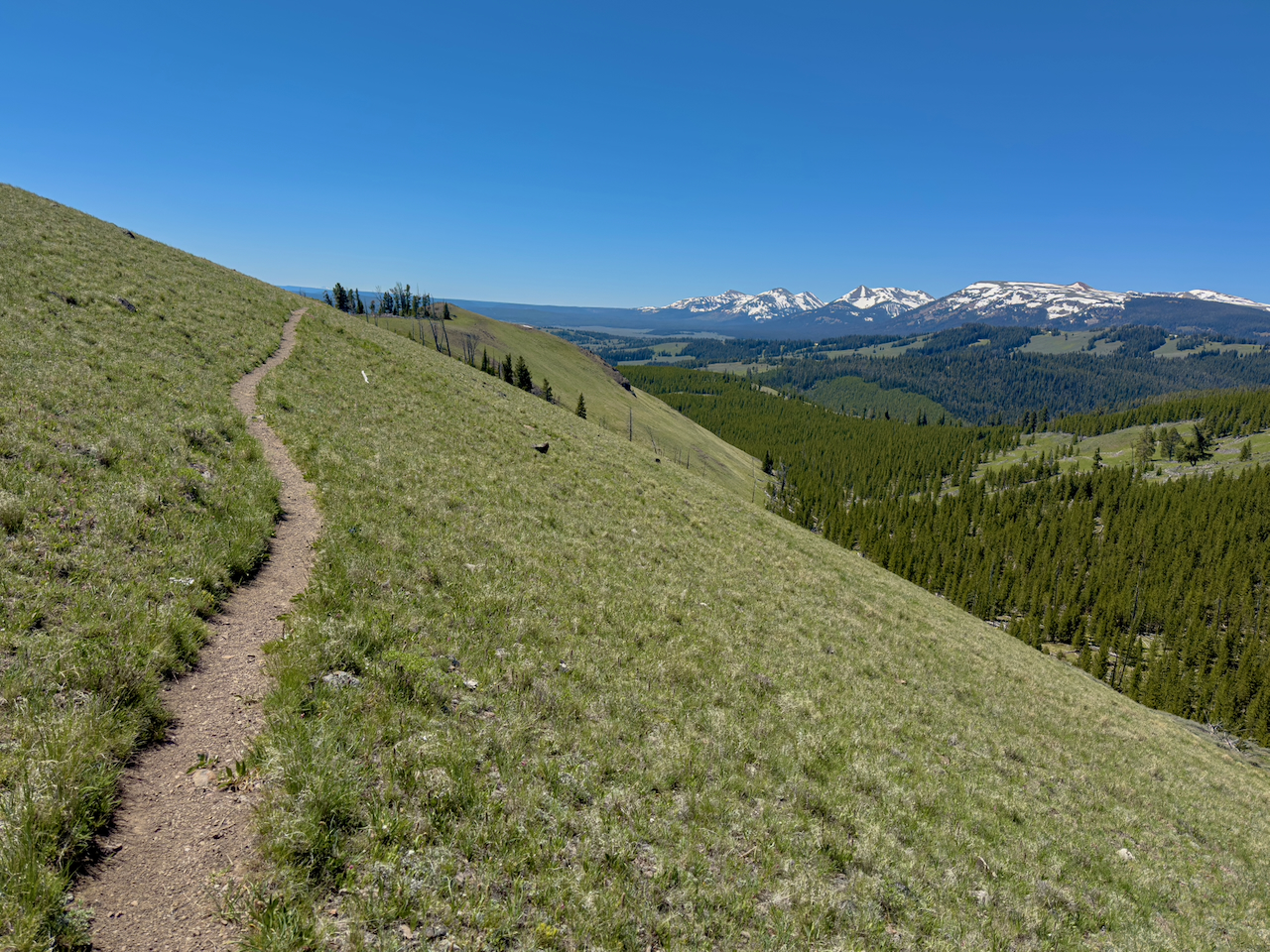
This week in Yellowstone National Park, from June 11th to June 17th, 2026, I hope to convince you to set an early morning alarm, tell you to take those side roads, and let you know why moose are so tricky to find in Yellowstone. I will also give you the complete weather forecast, a cool trail to hike, the snowpack update, the wildlife report, and everything else you need to have an incredible time, “This Week in Yellowstone.”
LISTEN TO THIS AS A PODCAST
The text below is my notes for the podcast. They may be incomplete.
Apple: https://podcasts.apple.com/us/podcast/this-week-in-yellowstone-national-park/id1789397931
Spotify: https://open.spotify.com/show/41E5WWldz4s7n6NXh2Lahr
RSS: https://rss.com/podcasts/this-week-in-yellowstone-national-park/
Disclaimer: I may miss a few details, so please feel free to reach out with any questions. I also mention park locations casually. If you’re unfamiliar, a quick search can help. This report only covers drivable areas of the park.
Also, this podcast is a passion project. If you enjoy it, I’d love a review or a quick email! To support my work, check out my hiking and wildlife-watching guidebooks, or join me for a guided hiking tour in Yellowstone’s backcountry. For more information, visit outdoor-society.com or contact me directly. Seriously though, come book a trail tour with me.
EXPERIENCE OF THE WEEK
Embrace the Early Mornings
Most people don’t associate vacations with alarm clocks. After all, you’ve come to Yellowstone to relax, explore, and enjoy one of America’s most spectacular national parks. Sleeping in sounds like part of the experience. Yet if you’re visiting Yellowstone in mid-June, there is a strong argument for doing the exact opposite. Some of the park’s most memorable moments happen before breakfast, and visitors who embrace the early mornings often discover a side of Yellowstone that many others never see.
The first thing you’ll notice is how alive the park feels at dawn. While visitors are still tucked away in lodges, campgrounds, and cabins, Yellowstone’s wildlife is already active. The National Park Service recommends dawn and dusk as the best times for wildlife viewing, and it’s easy to understand why. Cool morning temperatures encourage animals to move, feed, and travel before the warmth of the day sets in. Mid-June is an especially exciting time because many young animals are still visible across the park. Bison calves dot the valleys with their distinctive reddish coats, elk cows tend to newborn calves, and bears spend long hours foraging for food after emerging from spring. In places like Hayden Valley and Lamar Valley, an early drive can reveal a Yellowstone that feels far wilder than it does just a few hours later.
The scenery itself seems to come alive in a different way during the first hours of daylight. Yellowstone’s geothermal features never stop working, but they often put on their most dramatic display when the morning air is cool. Overnight temperatures in June can still dip into the 30s and 40s, creating ideal conditions for thick steam to rise from geysers, fumaroles, and hot springs. As sunlight begins filtering across the landscape, enormous clouds of steam drift through the geyser basins, creating scenes that feel almost otherworldly. Places like Old Faithful, Norris Geyser Basin, and the Upper Geyser Basin can look completely different from how they do later in the day. The combination of cool air, rising steam, and soft morning light creates an atmosphere that many visitors never experience because they arrive after breakfast.
The sunrise itself is worth setting the alarm for. By mid-June, the sun rises shortly before 6 a.m., and the light that spills across Yellowstone’s mountains, rivers, forests, and lakes transforms the landscape. Yellowstone Lake often lies remarkably calm during the early morning hours, reflecting the surrounding mountains and sky. Mist can rise from rivers and wetlands while the first sunlight illuminates distant peaks. The famous viewpoints remain the same, but the experience changes completely when they are viewed in the quiet light of dawn. A roadside pullout that barely earned a glance the day before can suddenly become one of the most memorable stops of an entire trip.
There is another practical benefit to getting an early start. Yellowstone is one of the most visited national parks in the United States, and June marks the beginning of the busy summer season. Parking lots fill, traffic backups develop, and popular attractions become crowded as the morning progresses. Visitors who begin exploring before sunrise often enjoy several hours of relative solitude. They find easier parking, quieter boardwalks, and less congestion on the roads. There is something special about standing near Old Faithful or walking through a geyser basin with only a handful of other people around. Those moments become increasingly difficult to find as the day unfolds.
The atmosphere of Yellowstone also feels different in the early morning. The air is crisp and cool. Birdsong carries across meadows and forests. The sounds of rushing rivers and bubbling thermal features seem more noticeable when fewer people are around. Instead of rushing from one famous attraction to another, the early hours invite visitors to slow down and appreciate the park itself. Yellowstone has always been a place of grand scenery and iconic landmarks, but it is often the quieter moments that leave the strongest impressions.
Perhaps the greatest reward for getting up early is that the day is still ahead of you. By the time many visitors are finishing breakfast, you’ve already watched wildlife in the valleys, seen steam rising from geothermal basins, experienced sunrise over the mountains, and visited some of the park’s most famous attractions. Rather than losing sleep, you’ve gained access to a version of Yellowstone that feels more peaceful, more dramatic, and more connected to the rhythms of the natural world.
The next time you’re tempted to hit snooze during a June visit to Yellowstone, consider what you’ll be missing. The wildlife will already be moving through the valleys. The thermal features will be sending clouds of steam into the cool morning air. The first sunlight will be painting the landscape in gold. Long before the crowds arrive, Yellowstone will be putting on one of its best shows of the day.
TIP OF THE WEEK
Take the Side Roads
If you want to experience Yellowstone a little differently, there is an easy way to do it.
Most visitors stick to the main roads, rushing from Old Faithful to Canyon Village to Mammoth Hot Springs and out to Lamar. What many don’t realize is that some of Yellowstone’s most memorable moments happen just a few miles off the main route. These short scenic drives offer a slower, quieter side of the park, where wildlife sightings, waterfalls, rivers, and wide-open landscapes often outshine the more famous attractions.
One of the classic side roads is Virginia Cascades Drive, a narrow, one-way road just east of Norris Junction. The 2.5-mile drive follows the Gibbon River through dense lodgepole pine forest before arriving at Virginia Cascades, a beautiful 60-foot waterfall tumbling over volcanic rock. The road feels like stepping into an older, less hurried Yellowstone. Since RVs and buses aren’t permitted, traffic is usually light, making it a peaceful escape from the busy highway.
A little farther south, Firehole River Drive offers another worthwhile detour. Running alongside the Firehole River near Madison Junction, this short one-way route reveals a side of Yellowstone many people speed past. The river cuts through a dramatic canyon, with overlooks of waterfalls, geothermal features, and river scenery that are easy to miss from the main road. The Firehole River is one of Yellowstone’s most unique waterways because it is warmed by the park’s geothermal activity, creating landscapes unlike anywhere else in the park. Visitors often spot bison and elk nearby, especially during quieter morning and evening hours. (Yellowstone Explored)
Near Yellowstone Lake, Gull Point Drive offers a completely different experience. This seasonal road meanders through lakeside forest to quiet shoreline viewpoints where the pace feels worlds away from the crowds at West Thumb or Old Faithful. The drive is especially rewarding for birdwatchers and photographers, with opportunities to enjoy sweeping views across North America’s largest high-elevation lake. Sometimes the best Yellowstone memories come not from checking off famous landmarks, but from sitting quietly along a lakeshore and watching the light change.
For wildlife enthusiasts, Blacktail Plateau Drive is one of Yellowstone’s most underrated roads. This six-mile, one-way gravel route between Mammoth Hot Springs and Tower Junction winds through open meadows, forests, and high ridges that provide excellent habitat for wildlife. The National Park Service highlights the drive as a more rustic alternative to the Grand Loop, with opportunities to see elk, bears, bison, and other animals while enjoying alpine scenery. Early mornings and evenings are especially rewarding, and many repeat Yellowstone visitors consider it one of the park’s best wildlife drives precisely because it receives far less traffic than Lamar Valley or Hayden Valley. (National Park Service)
If your goal is spotting predators, Slough Creek Road deserves a place on your itinerary. Located near the famous Lamar Valley, this gravel road leads to one of Yellowstone’s most celebrated wildlife-watching areas. Wolf watchers regularly gather near Slough Creek at dawn, scanning the hillsides and meadows for members of Yellowstone’s renowned wolf packs. Bears, moose, coyotes, and countless bird species are also frequently seen in the area. The road itself is short, but it opens the door to one of the richest wildlife habitats in the Greater Yellowstone Ecosystem.
Then there’s Chittenden Road near Dunraven Pass. While many visitors know Mount Washburn as one of Yellowstone’s premier hikes, fewer take the spur road that climbs toward the mountain’s trailhead. Even if you’re not planning a hike, when open, the drive rewards visitors with sweeping mountain views and excellent opportunities to spot bighorn sheep. On clear days, the vistas stretch across vast portions of the park, offering a reminder of Yellowstone’s immense scale.
There is also a side road heading back to West Yellowstone that I highly recommend. It is a one-way road, heading west, that skirts along the river and allows you a chance to slow down and enjoy a few more moments in the park before you exit.
The truth is that Yellowstone’s side roads aren’t just shortcuts or alternate routes. They’re invitations to slow down. They encourage you to trade the rush of seeing everything for the experience of truly seeing something. While thousands of visitors sit in traffic between the park’s headline attractions, these quieter roads offer a chance to discover the Yellowstone that many people miss: a place of hidden waterfalls, wildlife-filled meadows, peaceful lakeshores, and unexpected moments of solitude.
RANDOM YELLOWSTONE FACT OF THE WEEK
Why Are Moose So Hard to See in Yellowstone?
Ask visitors what wildlife they hope to see in Yellowstone, and most will mention bears, wolves, bison, or elk. Ask what animal they actually struggle to find, and one species comes up again and again: the moose.
It can be a little surprising. Moose are the largest members of the deer family. Bulls can weigh close to 1,000 pounds and stand more than six feet tall at the shoulder. You would think something that large would be easy to spot.
Yet many people spend days exploring Yellowstone without seeing a single moose. The reason has less to do with the animal itself and more to do with what happened to Yellowstone nearly four decades ago.
For much of the 20th century, moose were far more common in Yellowstone than they are today. According to the National Park Service, Yellowstone’s moose population reached roughly 1,000 animals in the 1970s. Today, fewer than 200 remain in the park. The northern Yellowstone population has declined by at least 75 percent since the 1980s.
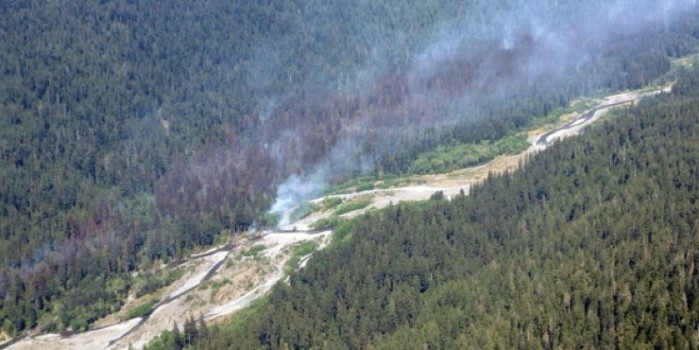
One of the biggest turning points came during the historic fires of 1988. Those fires affected about 36 percent of Yellowstone National Park, transforming hundreds of thousands of acres of forest. While many Yellowstone species recovered quickly, moose did not. In fact, the National Park Service notes that moose were the only native ungulate in Yellowstone whose population decline became apparent after the fires. Elk, deer, and bison rebounded, but moose numbers continued to fall.
Why were the moose hit so hard? The answer lies in the type of habitat they depend on. Unlike many moose populations elsewhere in North America, Yellowstone’s moose rely heavily on mature spruce and fir forests for winter survival. The 1988 fires burned large areas of these older forests, removing important winter habitat and reducing available browse. After the fires, deeper snow accumulated in places where protective forest canopies had been lost, making survival even more difficult. The winter of 1988-89 was particularly harsh, and many older moose died during that period.
In a sense, many moose didn’t simply disappear. They lost the habitat that had made portions of Yellowstone attractive to them in the first place.
The fires weren’t the only factor, however. The National Park Service points to a combination of causes behind Yellowstone’s long-term moose decline, including habitat loss, predators, hunting pressure outside the park, and changes in the surrounding ecosystem. Moose reproduce more slowly than elk and are naturally less numerous, making population recovery a much slower process.
Another challenge for visitors is that Yellowstone isn’t necessarily the best moose habitat in the Greater Yellowstone Ecosystem anymore. Many of the region’s moose are found in areas outside the park, particularly in wetter habitats and drainages that provide the food and cover they need year-round. Within Yellowstone, moose are now most often found in the park’s southwestern corner and along drainages such as Soda Butte Creek, Pelican Creek, the Lewis River, and the Gallatin River.
This helps explain why seeing a moose in Yellowstone feels so special today. Bison number in the thousands. Elk are common throughout much of the park. Moose, on the other hand, exist in relatively small numbers scattered across a landscape larger than Rhode Island and Delaware combined.
That’s why a Yellowstone visitor can spot hundreds of bison, dozens of elk, perhaps even a bear or wolf, and still go home without seeing a single moose. Ironically, that rarity is part of what makes a moose sighting so memorable. When one finally steps out along a willow-lined creek or appears beside a quiet river at dawn, you’re looking at one of Yellowstone’s most elusive success stories and one of its most challenging conservation puzzles.
The next time someone tells you they didn’t see a moose in Yellowstone, it isn’t because they weren’t looking hard enough. It’s because they’re searching for an animal whose numbers have never fully recovered from a dramatic shift in the park’s landscape that began with the fires of 1988 and continues to shape Yellowstone today.
WEATHER FOR THE COMING WEEK
As always, this is the best forecast for the week at the time of recording. The forecast can change numerous times in a week, but this should be within the ballpark of what you’ll experience when visiting the park.
I am too lazy to type it all out, so you’ll have to listen to the podcast to get the weather forecast, or just contact me.
Apple: https://podcasts.apple.com/us/podcast/this-week-in-yellowstone-national-park/id1789397931
Spotify: https://open.spotify.com/show/41E5WWldz4s7n6NXh2Lahr
RSS: https://rss.com/podcasts/this-week-in-yellowstone-national-park/
ROADS CONDITIONS
No main park roads are closed now. While unlikely, be aware that roads can close at any time due to inclement weather.
For up-to-date information, call (307) 344-2117 for recorded information, or sign up to receive Yellowstone road alerts on your mobile phone by texting “82190” to 888-777.
CAMPING INFO
Mammoth is open. Madison is open. Fishing Bridge is open. Bridge Bay is open. Tower Campground is open. Canyon is open. Indian Creek opens on the 12th. Slough Creek opens on the 15th. Lewis Lake opens on the 15th.
WILDLIFE WATCHING UPDATE
You have to listen to the podcast to get this information. Sorry.
Apple: https://podcasts.apple.com/us/podcast/this-week-in-yellowstone-national-park/id1789397931
Spotify: https://open.spotify.com/show/41E5WWldz4s7n6NXh2Lahr
RSS: https://rss.com/podcasts/this-week-in-yellowstone-national-park/
PICK UP A GUIDEBOOK
Love what you have heard on this podcast and want more information on wildlife watching? Get a copy of my wildlife-watching guidebook to the region! Available in both ebook and paperback formats, my book will help you spot wildlife like a seasoned local. Please consider buying a book directly from me, as I make next to nothing when they are sold on Amazon. Grab your copy now at outdoor-society.com!
TRAIL ALERTS AND UPDATES
The Backcountry Conditions Page is updated! I have a link to it in the show notes. That site is the easiest way to check the status of a trail you want to hike.
TREK OF THE WEEK
Seven Mile Hole
The following is an excerpt from my hiking guidebook that covers over 50 of my favorite trails in and around Yellowstone National Park.
Starting at the end of the most dramatic sections of the Grand Canyon of the Yellowstone, this trail is largely overlooked. No boardwalks are found, nor are any of the amenities you find when driving and hiking along the north rim of the canyon. Instead, what you find here is a long and wonderful trail along the canyon rim, where sweeping views of the tree-lined cliffs continue to leave one in awe.
While the rest of the views of Yellowstone’s Grand Canyon often leave people speechless, the subtle beauty along this trek makes the canyon and river feel more approachable and gentle, welcoming you as you hike downriver. Across the way, keep an eye out for Silver Cord Cascade, a waterfall that is most impressive after a heavy rain or during the early summer months.
This hike is honestly a spot in the Canyon area where one can truly take a deep breath and relax in nature. The first half of the trail is in the woods with minimal views, but once you do get views, they will be etched in your mind’s eye forever. With the added bonus of being able to walk directly through a thermal area before reaching the Yellowstone River, this trail could become a yearly tradition for you.
The important thing to know about this trail is that you get what you want out of it. Hike here with an open mind and lowered expectations.
Not because they won’t be met, but because this trail will reward you well. All you have to do is be open to its wonders.
For the first 1.3 miles, the trail runs parallel to the canyon rim, with great views every so often. The path meanders in the woods a bit, but the canopy is welcomed, absorbing the sounds of the nearby infrastructure of Canyon and replacing it with the sounds of wind in the trees and the river below.
The next mile of trail is a well-maintained single-track trail, passing through part of a forest that is home to grizzlies and black bears, as well as bison and elk. The path rises and falls in manageable sections, never really climbing steeply. At 2.4 miles, you’ll reach a clearing/ seasonal pond. Be aware that this is the one section of the trail that may have some mosquitoes, so come prepared. For this entire section, you’ll have gained roughly 400 feet in elevation.
If you look north in the clearing, you’ll see Mount Washburn rising in the distance. If you feel called to summit the mountain from this trail, please contact me or pick up my guidebook. There is also a hidden and overlooked thermal area on the spur trail that leads to the summit of Washburn. However, it is a serious day. But it is a fantastic hike for those able to do it.
Beyond the clearing, the trail continues to pass through the forest, with minimal views emerging until 3.3 miles from the trailhead. Here, you’ll see the forested canyon walls, as well as the Yellowstone down below. From this point on, you’ll be descending down to the Yellowstone River, 1,200 feet down.
At the 4-mile mark, 700 feet away from the aforementioned overlook at 3.3 miles, one of the hidden gems of this hike emerges- an area with small bubbling pools, fumaroles, and other unique thermal area features scattered throughout. A well-worn footpath should be visible to maneuver through this area. Do not deviate from this, as the ground may not be reliable or firm. Don’t let this scare you away, though! This area is a great spot to look around and enjoy, especially knowing that not very many visitors to the park will ever see it.
The next mile of the trail continues to descend down to the river, passing through a forest, past a backcountry campsite spur trail, and onto the rocky shore of the river. If you brought a fishing pole, enjoy your time here. If you came down empty-handed, just sit back and enjoy the view.
The trek out is the tough part of this hike. The trail will climb out of the canyon for the next two miles, with a gain of 1,300 feet over that time. It will more than likely feel steep, and you may be tired. You’ll be okay, though. The remaining three miles will feel much easier and should pass quickly, with canyon views emerging once again for the last 1.3 miles.
NEXT WEEK
In the next episode, I’ll return with all of the information you need to have a good week in the park, including wildlife, weather, and trail updates. Until then, book a tour with me, pick up a guidebook of mine, and happy trails!