 by
by 
This week in Yellowstone National Park, from January 22nd to January 28th, 2026, I talk about coyote mating season, tell you about a trail that will have you standing above a stunning section of the Yellowstone River, give an update on the wolf that was poached out of Gardiner, and even tell you about the wolf reintroduction that happened 30 years ago. I will also give you the complete weather forecast, the snowpack update, the wildlife report, and everything else you need to have an incredible time, “This Week in Yellowstone.”
LISTEN TO THIS AS A PODCAST
Apple: https://podcasts.apple.com/us/podcast/this-week-in-yellowstone-national-park/id1789397931
Spotify: https://open.spotify.com/show/41E5WWldz4s7n6NXh2Lahr
RSS: https://rss.com/podcasts/this-week-in-yellowstone-national-park/
Disclaimer: I may miss a few details, so please feel free to reach out with any questions. I also mention park locations casually. If you’re unfamiliar, a quick search can help. This report only covers drivable areas of the park.
Also, this podcast is a passion project. If you enjoy it, I’d love a review or a quick email! To support my work, check out my hiking and wildlife-watching guidebooks, or join me for a guided hiking tour in Yellowstone’s backcountry. For more information, visit outdoor-society.com or contact me directly. Seriously though, come book a trail tour with me.
THIS WEEK’S YELLOWSTONE NEWS
Wolf Poached by Gardiner, Montana
A wolf from the Yellowstone ecosystem has been killed, and this one is under active investigation as an illegal killing. Montana Fish, Wildlife & Parks game wardens are seeking information after a GPS-collared gray wolf believed to be from Yellowstone National Park was killed in Montana late last year. The wolf’s tracking collar sent a mortality signal from the Jardine area, just north of Yellowstone’s boundary, alerting biologists that something had gone wrong.
When wardens responded, they found the collar cut off and thrown into a tree, but the wolf’s body was never located. That detail is significant. The missing carcass and discarded collar strongly suggest someone deliberately removed evidence, complicating the investigation and raising red flags for wildlife managers.
Preliminary information indicates the wolf was likely killed around 10 p.m. on December 25, 2025, within Wolf Management Unit 313. That unit had been closed to wolf hunting since November 16, after the legal quota was met. Under Montana law, killing a wolf in a closed unit is illegal, making this incident a clear violation of state regulations if confirmed. FWP is asking anyone with information to contact Gardiner game warden Kameron Rauser or submit tips through the TipMONT system. A reward of up to $1,000 may be available for information that helps solve the case.
This wolf is believed to have been part of the Junction Butte Pack, one of Yellowstone’s most well-known packs and a frequent favorite of visitors watching wolves in the Lamar Valley. The pack has already experienced several high-profile losses in recent years, and each death adds to concerns about how vulnerable Yellowstone wolves can be once they cross park boundaries. The poaching of wolf 1478F highlights a long-standing tension in the Greater Yellowstone Ecosystem. Inside the park, wolves are fully protected. Step across the invisible park boundary, and those same animals are suddenly subject to state hunting and trapping regulations. In this case, this is poaching, which is illegal, and the person who did this is pretty terrible and hopefully loses hunting rights for the rest of their lives. There are so many ethical and conscientious hunters, and this person is not one of them; they are tarnishing the reputation of legal hunters everywhere.
The loss of a collared wolf is especially troubling for scientists. These collars provide critical data on movements, survival rates, pack dynamics, and causes of mortality. That information helps researchers understand how wolves use the landscape and how human activity affects them. When a wolf is killed illegally, and the collar is destroyed or discarded, that data disappears with it, creating gaps in long-term research that has been ongoing since wolf restoration began.
This case also underscores a larger, ongoing tension in the Greater Yellowstone Ecosystem. Wolves are fully protected inside Yellowstone National Park, but the moment they cross into Montana, they fall under state hunting and trapping rules. While some wolves are killed legally outside the park, incidents like this highlight how difficult it is to manage wide-ranging predators that don’t recognize human-drawn boundaries.
As the investigation continues, officials are urging the public to come forward with any information.
One interesting thing I found when researching this was a short paragraph in the Cowboy State Daily Newspaper. It said, “Wolf advocates argue that the Junction Butte wolves are so acclimated to crowds, they don’t fear humans, making them easy targets when they venture outside the park.”
It is probably time we have a serious talk about how the current brand of wolf watchers is impacting wolves and helping to put them at risk, too. But that is something for a later day. First, we deal with poaching.
EXPERIENCE OF THE WEEK
Coyote Mating Season
In late winter, when Yellowstone feels quiet and locked in snow, coyote mating season brings the landscape to life in subtle but powerful ways. From late January through February, coyotes across the park enter a brief but intense breeding window, and for visitors willing to slow down, listen, and linger, it can be one of the most rewarding wildlife experiences Yellowstone offers. According to the National Park Service, coyotes typically form strong pair bonds, often lasting for multiple years, and mating season is when those bonds are renewed and reinforced through sound, movement, and shared purpose.
This is the time of year when Yellowstone’s soundscape changes. Coyotes become more vocal, especially at dawn, dusk, and during the night. Their calls are not random noise; they are communication. Mated pairs howl together to strengthen their bond, announce territory, and signal their presence to neighboring coyotes. Group yipping and chorus howls often ripple across valleys, echoing off snow-covered hillsides and providing a soundtrack to a cool winter day. The NPS notes that these vocalizations play a key role in courtship and territorial defense, making winter one of the best times to hear coyotes, even when you can’t see them.
Behaviorally, coyotes also change how they move across the landscape during mating season. Pairs travel together more frequently, often hunting in loose coordination and spending long stretches simply walking side by side. These moments, two coyotes trotting across an open snowfield, pausing to look back at one another, or stopping to scent mark, are quiet expressions of partnership. The International Wildlife Damage Management Council describes mating as a short but highly synchronized period, with females receptive for only a few days, which explains the heightened focus and intensity seen during this time.
As mating concludes, coyotes begin preparing for the next stage: denning and pup rearing. Even before pups are born in April, pairs start inspecting potential den sites on south-facing slopes, hillsides, and well-drained soils, often using old badger burrows or digging their own. This preparation is part of the ritual too, a shared investment in what comes next. Their winter diet of voles, mice, and carrion from winter-killed elk fuels this demanding season, keeping them close to open valleys where prey is accessible beneath the snow.
For visitors, this is an invitation. Bring binoculars. Park the car. Turn off the engine. Let the cold sink in and listen. Coyote mating season isn’t flashy or guaranteed, but when it happens, a chorus at twilight, a bonded pair moving with purpose, it feels like being let in on something private and ancient. Winter in Yellowstone rewards patience, and few experiences capture that better than standing in the cold, hearing coyotes announce their lives to the snow-covered world.
TIP OF THE WEEK
Make Sure You Don’t Dump Your Drink At A Pullout
It’s easy to think that dumping a half-finished cup of coffee or a melted soft drink out of your car window at a pullout in Yellowstone is harmless. After all, it’s just liquid, right? In a place as vast and wild as Yellowstone National Park, though, even small actions can have bigger consequences than most people realize. With a little awareness, visitors can help keep the park cleaner, safer, and healthier for wildlife, and for the people who come after them.
One of the biggest concerns is animal safety. Many of Yellowstone’s animals are drawn to unfamiliar smells, especially sweet or food-related scents. Coffee, soda, sports drinks, and flavored teas all contain sugars or strong aromas that can attract wildlife to roadsides and pullouts. When animals start associating these areas with food smells, they spend more time near roads, increasing the risk of vehicle collisions. Bison, elk, foxes, bears, and even small mammals can be injured or killed simply because they were lured closer to traffic by something as simple as a spilled drink.
There’s also the issue of what’s actually in those beverages. Sugars, caffeine, artificial sweeteners, and acids don’t belong in the natural soils and waterways of the park. Over time, repeated dumping in the same pullouts can alter soil chemistry, affect plants, and potentially contaminate nearby streams or thermal runoff areas. Yellowstone’s ecosystems are finely balanced, shaped by geology, water, and climate over thousands of years. Introducing human-made substances, even in small amounts, can slowly chip away at that balance.
Beyond wildlife and ecology, there’s a shared visitor experience to consider. Pullouts are places where people stop to take photos, scan for wildlife, or simply soak in the view. Sticky pavement, lingering odors, and stained gravel take away from the sense of wildness that makes Yellowstone special in the first place. Keeping these spaces clean helps everyone enjoy the park the way it was meant to be experienced.
The good news is that the solution is simple. Hold onto your drink until you reach a restroom sink, trash can, or your lodging for proper disposal. Many parking areas and developed sites in Yellowstone are equipped for this, and planning makes it easy.
Yellowstone thrives when visitors act as stewards. Choosing not to dump drinks at pullouts is a small, thoughtful decision—but it helps protect wildlife, preserves natural systems, and keeps the park wild for generations to come.
RANDOM YELLOWSTONE FACT OF THE WEEK
The 1996 Wolf Reintroduction
As many know, the initial release in 1995 involved 14 wolves captured in Alberta and British Columbia, placed in three acclimation pens on Yellowstone’s northern range at Crystal Creek, Soda Butte Creek, and Rose Creek. These pens gave the wolves a period of adjustment before full release, allowing them to see the landscape, learn the sounds and smells, and develop social bonds with minimal human contact. When the pens were opened in March 1995, most wolves remained nearby, establishing the first modern packs in the park.
Encouraged by this early success, park biologists and the U.S. Fish and Wildlife Service moved forward with a second round of transplants in January 1996. This time, 17 wolves were captured from wild populations in Canada and placed into four acclimation pens located at strategic sites across the park: Crystal Creek and Rose Creek (reused from 1995), plus two new locations at Nez Perce Creek and Blacktail Plateau. These sites, spread across northern and western Yellowstone, were chosen to encourage wolf establishment beyond a single area and help distribute packs across suitable winter range.
Each group remained in its pen through the cold months, fed carcasses of elk, deer, moose, and bison while biologists monitored their health and behavior. Wolves were fitted with radio collars so scientists could track movements after release, and human interaction was kept minimal to maintain natural wariness. By April 1996, the pens were opened, and the wolves dispersed into the surrounding terrain. Most settled nearby, quickly forming social groups and beginning to hunt elk and other ungulates, pioneering a new era of predator–prey dynamics in the park.
The result by year’s end was dramatic. The combined 1995 and 1996 releases produced nine packs totaling about 51 wolves in Yellowstone. Some packs even produced pups while still in the acclimation pens, a surprise that accelerated population growth and helped establish stable family groups.
These early outcomes were so strong that they reshaped the recovery plan itself. The original blueprint for wolf restoration called for releases over multiple years, perhaps three to five, to reach recovery benchmarks. Yellowstone’s 1995–1996 success, however, meant that additional transplants were no longer necessary. Wolves were reproducing, surviving, and expanding on their own far sooner than managers expected, so the reintroduction program was concluded earlier than originally planned.
Survival in those first two years was notable. Of the total wolves translocated, only a small number of mortalities were documented through 1996, and most deaths were linked to human causes such as collisions or removal outside park boundaries rather than failure to adapt. This relatively low mortality helped fuel confidence that wolves could not only persist but thrive in Yellowstone’s harsh winters.
By the end of 1996, wolves were no longer a tentative experiment. They had become a self-sustaining predator population, shaping everything from elk movements to ecosystem processes across the park. The speed and scale of that transformation, much of it built on the foundation of the 1995 and 1996 introductions, remains one of the most compelling success stories in conservation history.
Key Sources
Yellowstone wolf reintroduction details and pen locations are based on NPS and interagency documentation of releases in 1995–1996.
Population and pack numbers for the first two years are drawn from official Yellowstone Wolf Project reports.
WEATHER FOR THE COMING WEEK
I am too lazy to type it all out, so you’ll have to listen to the podcast to get the weather forecast, or just contact me.
Apple: https://podcasts.apple.com/us/podcast/this-week-in-yellowstone-national-park/id1789397931
Spotify: https://open.spotify.com/show/41E5WWldz4s7n6NXh2Lahr
RSS: https://rss.com/podcasts/this-week-in-yellowstone-national-park/
SNOWPACK UPDATE
As of January 21st, the snowpack is around 112% of normal for this time of year. Last year on this date, we were averaging around 88% of our normal level. While this is good news, the lack of snow in the forecast is going to see the 2026 numbers drop dramatically.
ROADS CONDITIONS
The only road open is the road between Gardiner, Montana, and Cooke City, Montana. Please be aware that this road can close at any time due to inclement weather.
For up-to-date information, call (307) 344-2117 for recorded information, or sign up to receive Yellowstone road alerts on your mobile phone by texting “82190” to 888-777.
CAMPING INFO
There is only one campground open in the park right now, and that is the Mammoth Campground, which is open year-round.
WILDLIFE WATCHING UPDATE
You have to listen to the podcast to get this information. Sorry.
Apple: https://podcasts.apple.com/us/podcast/this-week-in-yellowstone-national-park/id1789397931
Spotify: https://open.spotify.com/show/41E5WWldz4s7n6NXh2Lahr
RSS: https://rss.com/podcasts/this-week-in-yellowstone-national-park/
TRAIL ALERTS AND UPDATES
There are no official trail alerts this week.
Honestly, the snow in much of the park is quite poor, which makes recommending a specific area for snowshoeing less than ideal. I know that new snow has fallen since last weekend, but we still need more before snowshoeing really gets good.
TREK OF THE WEEK
I’ve been debating recommending the Hellroaring Bridge trek during the winter, because usually, it is a bit of a journey that should only be done by skilled snowshoers and backcountry skiers. However, with the absolutely atrocious snowpack in the lower elevations and the scaling back of snow this coming week, I kind of feel like this is a good idea. However, please know that this is a good idea only for those with the right gear, clothing, and experience to take a winter trail adventure in the winter in Yellowstone. Despite the lack of deep snow, this is still not an easy walk in the park. If you want something easier, reach out to me or pick up my guidebook.
The Hellroaring region of the park is one of my favorites and a place where I lead tours to unseen wonders and spots that leave visitors wishing they could spend longer enjoying the area. In the winter, the area is largely ignored by park visitors, giving those willing and able an opportunity to have the place to themselves. While I could recommend an 8-12 mile trek here, instead, I will give you a perfect four-mile out-and-back, whetting your appetite for more days in the depths of Hellroaring.
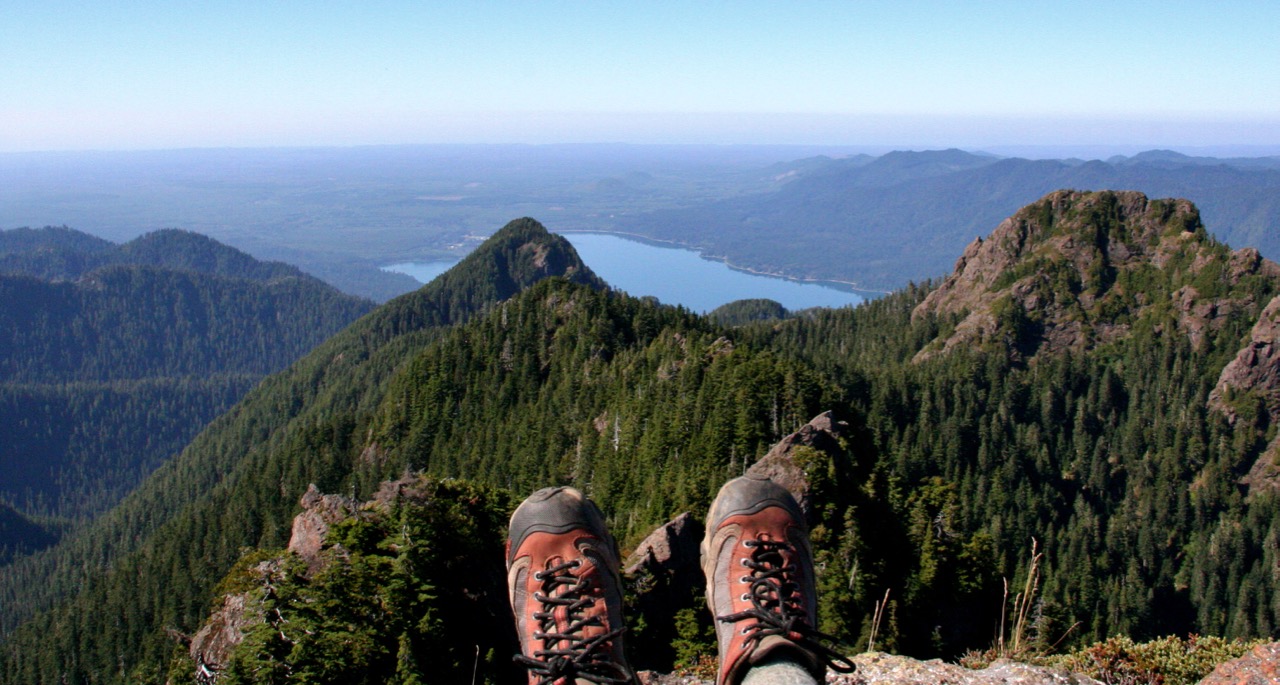
For this trek, you’ll start at the pullouts on the main road, about a half-mile west of theroad to the Hellroaring Trailhead. This road is seasonally closed, so parking at the pullouts is your only option. Once you have parked, walk on the side of the road to the Hellroaring Road, and follow that down to the trailhead. The trailhead from the pullout is about a mile. On the trail, follow it down as it makes its way through trees to an opening that gives a fantastic view of the Yellowstone River. From here, the trail switchbacks down the hill, losing around 450 feet of elevation in less than a half a mile. It eventually levels, signalling that you are nearing the bridge. After a few rolling hills, you’ll once again drop and reach the stunning suspension bridge over the Yellowstone River. The bridge sits 175 feet above the river, spanning a narrow, rocky canyon. Take your time here and look all over!
Once you are done enjoying the bridge, head back the way you came. While you could go deeper into Hellroaring, this isn’t the best time to do it. Save the rest of the region for a warmer day.
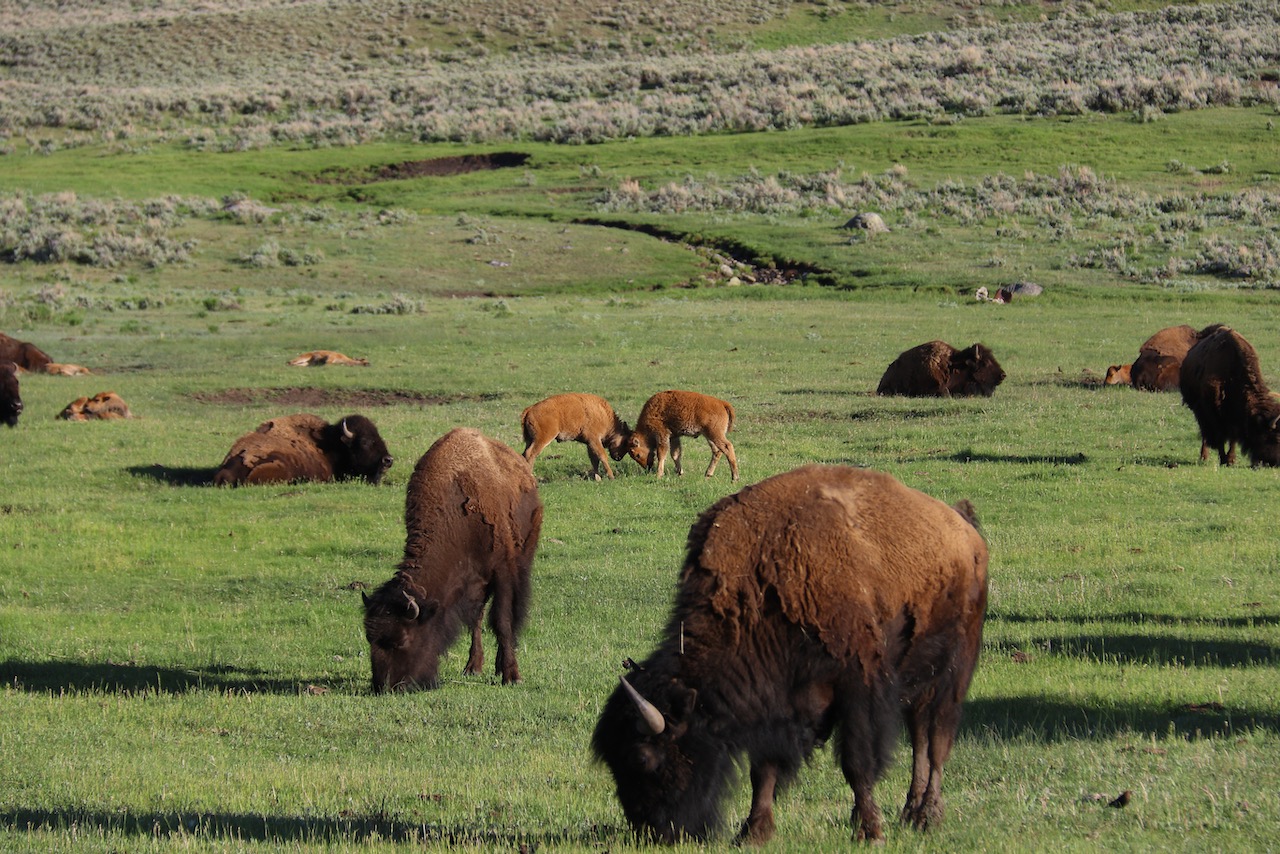
Please know that this area is popular for bison, and you will probably have them around. Stay 25 yards from them at all times, and if you have to go around them, do so 30-50 yards away. If they block the trail, do not try to scare them, as they may charge. Instead, go around. Going around may make the trail steeper and more sketchy, so know this before starting.
Miles: 4-ish
Elevation loss and gain: 600
NEXT WEEK
In the next episode, I’ll return with all of the information you need to have a good week in the park, including wildlife, weather, and trail updates.
Until then, book a tour with me, pick up a guidebook of mine, and happy trails!