 by
by 
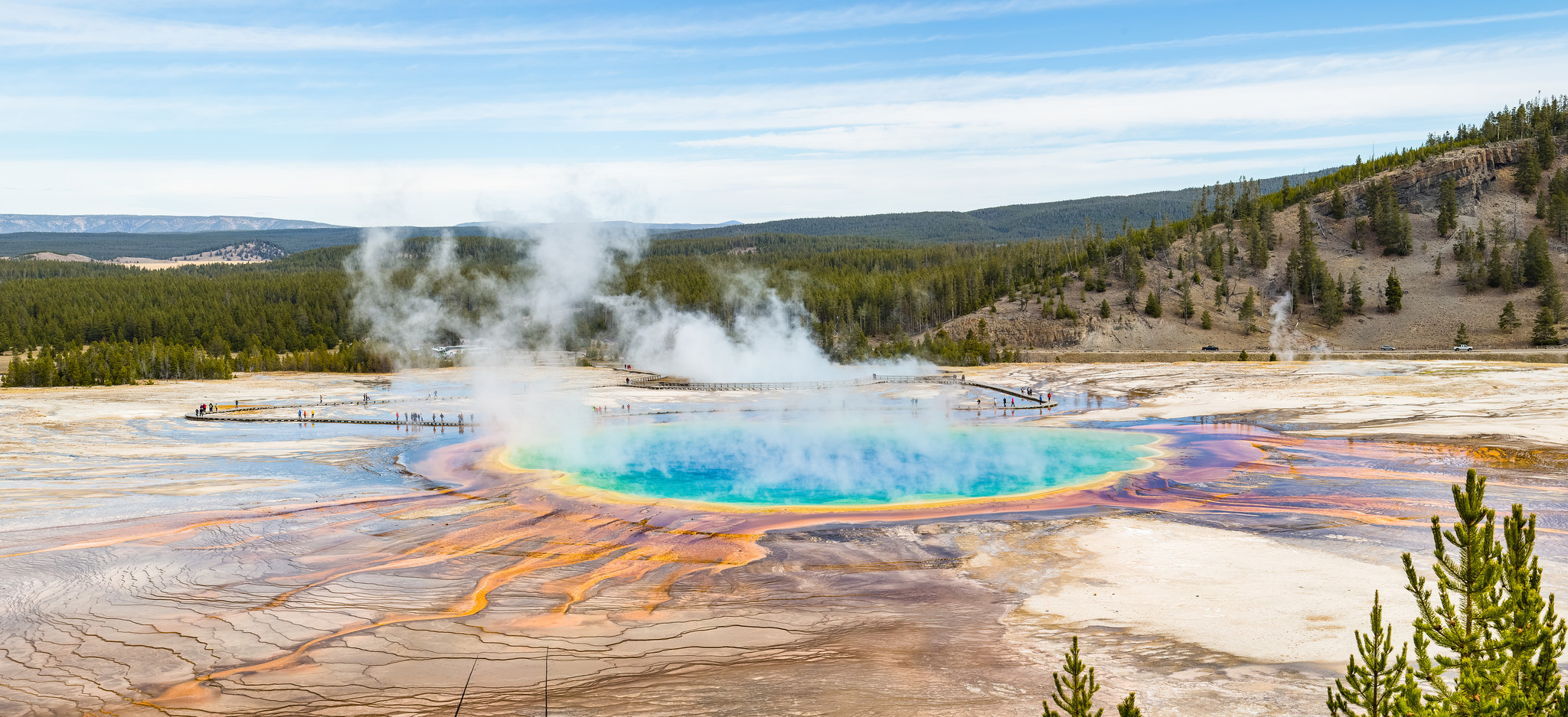
This week in Yellowstone National Park, from October 2nd through October 8th, 2025, I am really banking on the weather forecast to hold. If the snow doesn’t happen, I am sorry for being so snow-focused. I am just excited. It is still good information, though! This week, I tell you about how bears are seemingly everywhere, tell you to summit a snowy peak, give you tips on how to be prepared for a fall snowstorm, and try to answer the question, “How big is Yellowstone, really?” I will also give you the complete weather forecast, a cool trail to hike, the wildlife report, the news, and everything else you need to have an incredible time, “This Week in Yellowstone.”
LISTEN TO THIS AS A PODCAST
Apple: https://podcasts.apple.com/us/podcast/this-week-in-yellowstone-national-park/id1789397931
Spotify: https://open.spotify.com/show/41E5WWldz4s7n6NXh2Lahr
RSS: https://rss.com/podcasts/this-week-in-yellowstone-national-park/
Disclaimer: I may miss a few details, so please feel free to reach out with any questions. I also mention park locations casually—if you’re unfamiliar, a quick search can help.
Also, this podcast is a passion project—I’m not paid or sponsored. If you enjoy it, I’d love a review or a quick email! To support my work, check out my guidebooks on hiking and wildlife watching, or join me for a guided Yellowstone tour. For details, visit outdoor-society.com or reach out directly!
THIS WEEK’S YELLOWSTONE NEWS
Government Shutdown Update
So this is the information as of Wednesday afternoon, when I am recording this. If there are major changes in the next few days, I will consider releasing a standalone episode to let you all know what is going on. Until then, this is all I know:
The Trump administration plans to keep most national parks open to visitors if the government shuts down, using recreation fees to fund limited staff for essential services such as trash collection, campground operations, and law enforcement.
Most of the National Park Service’s 16,000 employees would be furloughed, leaving only skeleton crews in place. Parks with fee revenue would stay accessible, while those without would close or operate without visitor services.
Xanterra Update
“We have received word from the U.S. National Park Service that the entrances and roads into Yellowstone National Park will remain open and accessible during the government shutdown. This means that our lodges, restaurants, gift shops, restrooms, and services will be open and welcoming guests and visitors from around the world. Government-provided services (visitor center, public restrooms, etc.) will not be available.
Please note that our public restrooms will be open and available. The National Park Service will provide emergency services, but please be very careful when venturing into the park.”
Now, obviously, things can and will change, but all of this is accurate as of Wednesday, October 1st, at 2 pm. If you do plan on visiting the park, pack out all trash, bring your own toilet paper, do not leave any trash outside anywhere, and drive extremely safely. Also, if recreating outdoors in the park, do not take any risks, as help will be far away.
EXPERIENCE OF THE WEEK
Bears, and Bears in Snow
Few things are as fun to see in Yellowstone as a grizzly bear foraging for food in the fall while heavy, wet snowflakes fall from above. With the weather forecast shaping up to be a little dicey this weekend, coinciding with some awesome bearwatching possibilities, my experience may happen. If it doesn’t, I apologize for getting your hopes up.
Right now, bear watching in the park is awesome. I was in the park on Monday and saw seven bears, three grizzlies, and four black bears. I didn’t enter the park until nearly 11 am and exited the park by 530 pm. I drove from Gardiner to the Mud Volcano, then to Canyon, over Dunraven Pass, and then back to Mammoth. Nearly everyone I talked to on the short hikes or wildlife watching spots had similar bear experiences, and those who had been in the park a few days were telling me that every day was a bear extravaganza. Sure, some people didn’t see any bears, but I can only tell you what could happen.
Even a month ago, the bears were on the move, maybe eating at a carcass or something, but generally traveling from point A to B. Because bears are in hyperphagia right now, gorging themselves to prepare for winter, they tend to stick in one area for quite a bit of time if there is a food source. That is one reason why bear sightings seem to be much more prevalent. If you drive to where I say in my wildlife report later in this episode, you have a good chance to see some bears.
But for now, I want to let you know that this “less-than-ideal” weather coming in for the weekend may actually give you a once-in-a-lifetime bear watching experience that will continue to be remembered years after your trip. That is, of course, seeing a bear in a snowstorm.
While seeing any animal in a snowstorm is super awesome, the times I have seen a bear while it is snowy out are still somehow way cooler. This is coming from a guy who watched a herd of elk look at the falling snow and seem to try to catch snowflakes in Gardiner. As memorable as the elk sighting was, the bear in the falling snow moments still stand out more. Maybe it is because we expect bears to hide in their dens when there is snow outside. Maybe it is seeing snowflakes sticking to the back of such a massive beast. No matter what it is, the moment you see a bear while it is snowing is truly awesome.
If you can safely do it, search for wildlife as it is snowing during your Yellowstone visit. You might see nothing, but you may come across a bear or two, digging for grubs or eating berries off a branch, as big flakes of snow fall all around it.
TIP OF THE WEEK
Be Prepared For A Fall Snowstorm in Yellowstone
If you have already glanced at the forecast for the coming weekend and week, you’ll notice some cold temperatures and precipitation in the forecast. If you haven’t looked at the forecast yet, it may be quite cold and snowy. While the forecast could change, it may not, so you’d better be ready for what an early fall snowstorm will bring to the region.
For starters, expect the higher roads to close, both in and out of the park. They may not close, but they might, and one should be ready for that this time of year, espcially with a potential for snow in the lower elevations in the forecast. Yellowstone has three passes where roads go above 8,000 feet above sea level. They are Craig Pass, connecting Old Faithful to West Thumb, Sylvan Pass, which leads to the east entrance from Fishing Bridge, and Dunraven Pass, which connects Tower to Canyon. Each of these passes is known to close in early-season snowstorms. Outside of the park, the Beartooth Highway crests just under 11,000 feet above sea level, and the Chief Joseph Scenic Highway rises to over 8,000 feet.
Next, expect wet snow. While the snowstorms in the winter dump inches or feet of light and powdery snow in the area, these early-season storms pummel us with wet and heavy snow, making driving in any vehicle extremely difficult if there is a decent accumulation. Each and every year, people assume their AWD or 4WD will be just fine in this wet and heavy snow, and each and every year, we watch as those cars speeding by end up in accidents. Drive slowly, even if you think you’ll be just fine.
Clothing-wise, this can be tricky. Those of you who enjoy the cold weather will love this coming week. Those of you visiting from cold climates will find this to be very cold. Low temperatures in and around the park could drop as low as the teens this coming week, with pockets possibly hitting 10 or even single digits. However, these cold temperatures are going to creep well over 40 on the coldest of days, so don’t expect it to be super cold all day. By mid-week next week in West Yellowstone, lows could be in the 20s, but highs are almost 60. Therefore, bring layers, have a warm hat and gloves, and be prepared to be cold. That way, you can accept the day for what it is and move on. Also, it might be rainy or snowy, so have a decent layer of water-resistant or waterproof materials. Also, good footwear with traction. Those little heat packets for hands and feet are also a good idea to pick up. Worst case, you don’t use them.
Now, the question most ask is “what can I do if it is cold and rainy or snowing outside when I visit the park?” The answer is simple: be prepared and do most everything you have planned on doing. The cold, wet, and possibly snowy days are truly special out here, and seeing the first layer of snow on the trees, hills, prairies, and mountains is stunning. One of my favorite things to see after a snowstorm in the fall out here is the golden aspen leaves sitting on the white snow, as the clouds part and the blue sky brightens the day. Sure, you may not be able to drive all of the roads, but what will be open will still be awesome, amazing, and make for a memorable day in Yellowstone.
Finally, for those wondering how the animals will be in the rain or snow, know they will be just fine. In fact, they might be more active in this weather. The snow and cold will help with the urgency the animals of the park are feeling to get ready for winter, possibly making them eat and roam for food even more than on a warm, sunny day. Plus, if enough snow does fall, you’ll be able to easily see the movement of park wildlife in the freshly fallen snow.
I could talk about this all day, but these should serve as a good first step in being ready for a park visit with an autumn snowstorm. If you have questions beyond this, feel free to reach out to me, and I will do my best to help you further.
RANDOM YELLOWSTONE FACT OF THE WEEK
How Big is Yellowstone, Really?
One thing people seemed shocked by when they visit Yellowstone is the sheer size and scale of the park. When they look at a map to plan their trip, many fail to comprehend the distances and time it will take to go from one spot to the next.
Yellowstone National Park spans about 2.2 million acres. Often, you will hear it described as bigger than Delaware and Rhode Island combined. That comparison is fine, but it is meaningless to anyone who doesn’t know the size of Delaware. We also all know Rhode Island is a tiny state, so using it to compare anything always seems to diminish the size of Yellowstone. No offense, Rhode Island, you just aren’t that big.
I have also heard people say that Yellowstone is comparable in size to the state of Connecticut or roughly half the size of New Jersey. It’s also more than 60 times the size of New York City, not just Manhattan, but the entire city. Describing how big Yellowstone is often comes down to square miles, which is 3,472. Yellowstone National Park measures approximately 63 miles north to south and 54 miles east to west.
When it comes to roads, Yellowstone has 392 miles of paved road, longer than the driving distance from New York City to Pittsburgh, Pennsylvania.
In total, there are over 450 miles of road, including unpaved segments within the park, pretty much the distance from NYC to Cleveland, Ohio. It’s also about the same number of miles as driving from Atlanta to New Orleans, and just shorter than driving from Houston to Dallas, and back.
The famous Grand Loop Road, a figure-eight-shaped system connecting most of the park’s major sights, alone covers 142 miles. Driving the entire loop without stopping can take four to seven hours, depending on traffic, bison jams, or roadwork. For example, the distance from Old Faithful (in the park’s southwest) to Mammoth Hot Springs (near the northern entrance) is about 50 miles, taking roughly 1.5 to 2 hours to drive. From West Yellowstone, Montana, to Yellowstone Lake, it’s about 40 miles, a hour drive.
Within those vast distances lie enormous natural features. Yellowstone Lake, at 132 square miles, is the largest high-elevation lake in North America. Beneath the surface, the park sits atop one of the world’s largest active volcanoes, the Yellowstone Caldera, which measures about 30 by 45 miles. Add in the park’s nearly 1,000 miles of hiking trails and more than 10,000 geothermal features (including over 500 geysers), and it becomes clear that Yellowstone is less a park you “visit” in a weekend and more a wilderness the size of a small state. It’s a place where distances are measured not just in miles, but in experiences, each corner revealing a landscape as grand and wild as the last.
SNOWPACK UPDATE
Not in this week’s episode. This will be back in a few weeks, hopefully.
ROADS CONDITIONS
All major roads and most side roads are open right now in and around Yellowstone National Park. This includes Dunraven Pass and the Beartooth Highway. However, snowfall this weekend could cause road closures. And with a limited staff to potentially clear roads if that is needed, they may remain closed for a few days.
For up-to-date information, call (307) 344-2117 for recorded information, or sign up to receive Yellowstone road alerts on your mobile phone by texting “82190” to 888-777.
CAMPING INFO
Every campground in the park that is going to open this year is open, except for Indian Creek, Madison, and Grant. Throughout the park, there are numerous sites available this coming week.
WILDLIFE WATCHING UPDATE
You have to listen to the podcast to get this information. Sorry.
Apple: https://podcasts.apple.com/us/podcast/this-week-in-yellowstone-national-park/id1789397931
Spotify: https://open.spotify.com/show/41E5WWldz4s7n6NXh2Lahr
RSS: https://rss.com/podcasts/this-week-in-yellowstone-national-park/
PICK UP A GUIDEBOOK
Love what you have heard on this podcast and want more information on wildlife watching? Get a copy of my wildlife-watching guidebook to the region! Available in both ebook and paperback formats, my book will help you spot wildlife like a seasoned local. Please consider buying a book directly from me, as I make nothing when they are sold on Amazon. Grab your copy now at outdoor-society.com!
WHAT IS CLOSING THIS WEEK
Canyon
- Bear spray kiosks 10/4
- Canyon Lodge Cabins 10/4
- Canyon Post Office 10/6
Fishing Bridge
- Museum and Visitor Center 10/4
- Park Store 10/4
Grant-West Thumb
- Grant Village Lodge 10/4
- Grant Visitor Center 10/4
- Grant Park Store
- Grant Village Dining Room 10/5
- Grant Village Lodge Gift Shop 10/5
- Grant Post Office 10/6
Lake Village
- Lake Lodge Cabins 10/4
- Lake Yellowstone Hotel and Cabins 10/4
- Lake Lodge Cabins Gift Shop 10/5
- Wylie’s Canteen 10/5
- Lake Yellowstone Hotel Deli and Dining Room 10/5
- Lake Yellowstone Hotel Gift Shop 10/5
Norris
- Norris Park Store 10/4
- Norris Geyser Museum 10/4
Old Faithful
- Old Faithful Lodge and Cabins 10/4
- Old Faithful Lodge Cabins Bake Shop, Cafeteria, and Gift Shop 10/5
TRAIL ALERTS AND UPDATES
The Turbid Lake Trail is still closed, and for those of you hoping to do the Yellowstone River Overlook Trail, know that the Yellowstone River Picnic Area and the Specimen Ridge West Trailhead are closed. You can still hike it, you just need to park at pullouts 1/4 mi east to access Specimen Ridge Trail. All the information on trail conditions can be found on the Backcountry Conditions Page of Yellowstone National Park. It isn’t always updated, but it is better than going in without any knowledge.
TREK OF THE WEEK
A Mountain Summit in the Snow
The forecast this week probably means snow in the mountains over the weekend, so do not head out into the mountains for a hike this weekend. Instead, stick to the lower boardwalks and easier, flatter trails. Norris Geyser Basin or anywhere around the Grand Canyon of the Yellowstone after snow is a true treat and shouldn’t be missed. In fact, I should probably recommend the canyon if it does indeed snow this weekend, but I am a little too excited to talk about a summit to bail on it. Go to Canyon for an easier day, or Norris, but if you want a more wild day, here you go:
Once the weekend is over and things have calmed down, weather-wise, those of you active and the right kind of crazy should consider hiking up to a stunning, snowy, possibly sunny, summit in the early days of the week. I love hiking up Bunsen Peak after a good fall snowstorm, as the trail is easy enough to follow and short enough that you don’t feel like you are putting yourself in too much danger. You’ll get to potentially see the forests covered with snow from above, and see the higher peaks absolutely draped with a much-needed covering. The trail also has a potential for some cool animal tracks in mud and snow in the early morning hours, and the direct sunlight the mountain receives will possibly have the weekend snow melting away by mid to late afternoon. Bunsen is a great hike, even without the potential for a snow adventure, but getting up that high after wintery weather makes the usually mild (to many) hike feel that much more fun and exciting.
Plus, time is running out for a Bunsen summit. The road to the trailhead from Mammoth is scheduled to close for the winter in about a month.
NEXT WEEK
In next week’s episode, I’ll return with all of the information you need to have a good week in the park, including wildlife, weather, and trail updates.
Until then, happy trails!