 by
by 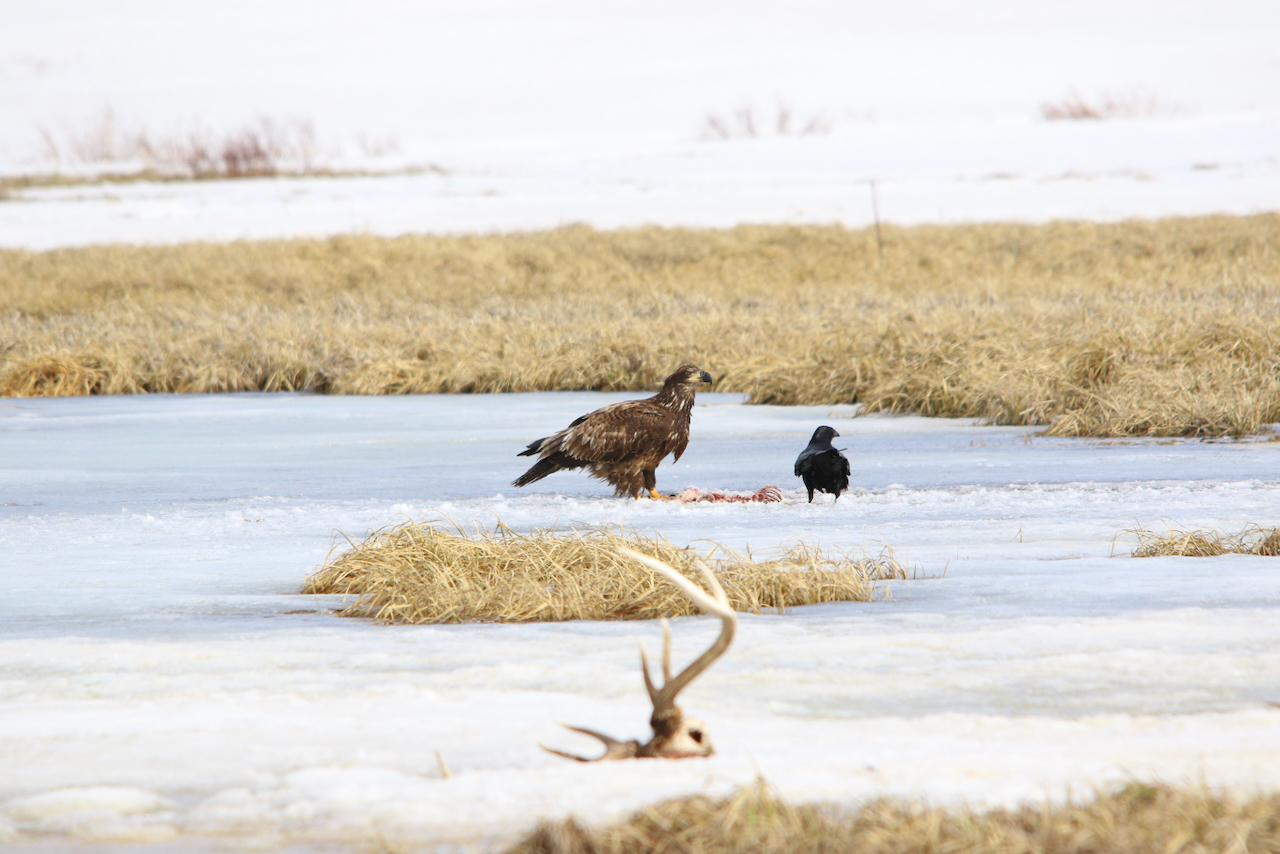
This week in Yellowstone National Park, from February 26th to March 4th, 2026, I talk about eagles, tell you about January’s visitation stats, update you on an experience that will be ending in Yellowstone this week, and talk about how parks gather visitation numbers. Plus, I will also give you the complete weather forecast, the snowpack update, a trail to hike, the wildlife report, and everything else you need to have an incredible time, “This Week in Yellowstone.”
LISTEN TO THIS AS A PODCAST
Apple: https://podcasts.apple.com/us/podcast/this-week-in-yellowstone-national-park/id1789397931
Spotify: https://open.spotify.com/show/41E5WWldz4s7n6NXh2Lahr
RSS: https://rss.com/podcasts/this-week-in-yellowstone-national-park/
Disclaimer: I may miss a few details, so please feel free to reach out with any questions. I also mention park locations casually. If you’re unfamiliar, a quick search can help. This report only covers drivable areas of the park.
Also, this podcast is a passion project. If you enjoy it, I’d love a review or a quick email! To support my work, check out my hiking and wildlife-watching guidebooks, or join me for a guided hiking tour in Yellowstone’s backcountry. For more information, visit outdoor-society.com or contact me directly. Seriously though, come book a trail tour with me.
THIS WEEK’S YELLOWSTONE NEWS
Is there any interest in a standalone episode on “How To Plan Your Yellowstone Trip”? If so, please email or text me your questions. My email is theoutdoorsociety@gmail.com, or you can text me at (406)589-1873.
Yellowstone National Park Sees Its Busiest January on Record
January 2026 marked a historic milestone for Yellowstone National Park, with 47,734 recreation visits recorded, making it the busiest January in park history. The figure, reported in the National Park Service’s Monthly Public Use report, surpasses all previous January totals and highlights continued growth in winter visitation.
The new record exceeds January 2022’s total of 46,615 visits and January 2024’s 42,740. It also marks the fifth consecutive year January visitation has topped 40,000 and only the ninth time the month has crossed that threshold. For comparison, January averages hovered between 28,000 and 30,000 for much of the late twentieth and early twenty-first centuries, underscoring how dramatically winter visitation has shifted.
Entrance data reflects typical winter access patterns. The North Entrance at Gardiner, Montana, the only entrance open year-round to regular wheeled vehicles, accounted for 32,381 visits. The West Entrance recorded 11,927, the South Entrance 3,187, and the East Entrance 239.
January’s report also shows how visitors used the park. There were 55 backcountry permitted campers, indicating continued interest in remote winter travel. Mammoth Campground, generally the only campground open year-round, hosted 32 campers. Lodging remained significant, with 9,329 lodge stays recorded at winter-operating properties.
The steady rise in January visitation suggests more travelers are intentionally choosing off-peak months, drawn by quieter landscapes, strong wildlife viewing opportunities, and dramatic geothermal features steaming in cold air. A lack of significant low-elevation snowfall likely also supported travel conditions this January.
The record-setting 47,734 visits in January 2026 confirm that winter is no longer a niche season in Yellowstone. It has become an increasingly important part of the park’s visitation story, bringing economic benefits to gateway communities while presenting evolving management considerations for park officials.
The only other real news this week is that snowcoach tours from Mammoth end for the season on March 1st! I’ll be talking about this in great detail in just a minute.
EXPERIENCE OF THE WEEK
Where Eagles Rule the River: Spotting Bald and Golden Eagles in Paradise Valley and Yellowstone’s Northern Range
The Yellowstone River flows partially through the Northern Range of Yellowstone National Park before leaving the boundary and heading north through Paradise Valley. This connected landscape supports both bald eagles and golden eagles, including important nesting territories.
Bald eagles in Yellowstone are part of the Rocky Mountain breeding population and are closely monitored by the National Park Service. They establish territories near rivers and lakes where fish and waterfowl are reliable food sources. Nests are typically large stick structures built in tall cottonwoods or conifers near water, offering wide views of the surrounding area. Pairs reuse and expand these nests year after year, and some grow to enormous size.
In Yellowstone, bald eagles generally lay eggs between February and mid-April. Incubation lasts about 35 days, and young remain in the nest for roughly 10 to 12 weeks before fledging. Biologists monitor nesting success annually and have tracked around 30 or more territories in recent years. Productivity varies with weather, prey availability, and disturbance, though the long-term trend reflects a stable breeding population.
The Northern Range, including Lamar Valley, Slough Creek, and the Gardiner Basin, offers prime nesting and foraging habitat with open river corridors, abundant prey, and mature riparian trees. Bald eagles are often seen along the Yellowstone River and its tributaries, especially in winter and early spring when open water and carrion concentrate wildlife. During colder months, they shift more toward waterfowl and carrion when ice limits access to fish.
Just north of the park, Paradise Valley provides a similar habitat. The Yellowstone River flows freely through much of the valley with little infrastructure getting in the way. These conditions attract wintering bald eagles, including local breeding pairs and migratory eagles from farther north. While many nesting territories are inside the park, Paradise Valley functions as a key winter habitat and an extension of the larger ecosystem.
Golden eagles also nest across the Northern Range, which holds one of the highest densities of known golden eagle territories in Yellowstone. Unlike bald eagles, golden eagles favor open country and often build nests on rock ledges or steep cliff faces overlooking broad valleys. They typically lay eggs in early spring and reuse nest sites for many years. Their diet centers more on small mammals such as ground squirrels and rabbits, though they will scavenge carrion in winter. The sagebrush hills and grasslands of the Northern Range provide excellent hunting grounds, and golden eagles are frequently seen soaring along ridgelines or perched on rocky outcrops scanning for prey.
Late February and March are active periods for nesting behavior. Bald eagles reinforce nests, perform aerial courtship displays, and defend territories. Golden eagle nests can sometimes be spotted tucked into cliff bands with careful observation. Viewing should always occur from a respectful distance, as both species are sensitive to disturbance during nesting season.
The recovery of bald eagles in Yellowstone reflects broader conservation success following past declines tied to habitat loss and contaminants such as DDT. Today, seeing a nesting pair along the Yellowstone River or watching a golden eagle ride thermals above the Northern Range highlights the resilience of this ecosystem. In Paradise Valley and across Yellowstone’s Northern Range, eagle sightings have become a regular part of daily life for many locals. Together, these landscapes offer one of the most accessible and biologically rich eagle-watching regions in the American West for those willing to scan treetops, cliff faces, and open skies with patience and care.
If you would like tips on specific locations to look for eagles, both nesting and perched, feel free to reach out.
TIP OF THE WEEK
Snowcoach Tours from Mammoth Are Ending for the Season on March 1st: Here’s What That Means for You
Every year, the same pattern unfolds. March arrives, shoulder season lodging rates in Gardiner and Mammoth Hot Springs look appealing, flights are booked, and plans come together. Then comes the surprise. Snowcoach tours from Mammoth into Yellowstone’s interior end on March 1. It is part of the park’s normal seasonal operations, yet many visitors do not realize it until they are already in town.
Yellowstone operates under a structured oversnow travel system each winter. From roughly mid December through early March, most interior roads are open only to commercially guided snowcoaches and snowmobiles. The National Park Service ends oversnow travel in early March so crews can begin the transition to spring road clearing. From Mammoth Hot Springs, routes toward Norris and Old Faithful shut down on March 1. After that, oversnow vehicles step aside, and plows begin preparing roads for regular vehicle travel.
The road from Mammoth into the interior is currently scheduled to reopen to automobiles in mid April, weather permitting. The exact date depends on snowpack, drifting, and spring storms at higher elevations. Snowcoach and snowmobile tours from the West, South, and East Entrances continue for a short period beyond March 1, so visitors entering from those gateways may retain limited interior access. Those staying in Gardiner or Mammoth after March 1 cannot reach destinations such as Old Faithful, Grand Prismatic Spring, or the Grand Canyon of the Yellowstone until plowing is complete.
This winter-to-spring transition is deliberate. Oversnow travel protects road surfaces when the snowpack is deep and consistent. Once March arrives, plowing begins in stages across high elevation terrain where drifting and compacted snow can be significant. The work takes weeks and is shaped by mountain weather. From a management standpoint, the timing makes sense. From a visitor standpoint, especially for those expecting geysers framed in snow, it can feel disappointing.
What remains open often changes that perspective. The Northern Range, from Mammoth through Tower Junction and Lamar Valley to Cooke City, stays open to regular vehicle travel year-round. Wildlife biologists and park managers widely recognize it as one of North America’s premier wildlife watching regions. Open valleys, lower elevation winter range, and a paved road corridor create unusual viewing opportunities.
March is frequently underestimated. Full geothermal access from the north is not available, yet wildlife activity remains strong. Wolves are often visible before spring dispersal patterns shift. Bison sweep snow aside to forage. Elk begin transitioning toward early spring behavior. Coyotes and foxes hunt along the road corridor. Bald eagles concentrate near open water. In some years, the first grizzly bears emerge later in the month, depending on conditions.
Lamar Valley, Slough Creek, Hellroaring, Soda Butte Creek, and the Blacktail Plateau area remain active landscapes. Wildlife density is what sets this region apart. Animals use the same valleys and benches that parallel the road, allowing visitors to observe multiple species in a single day without extensive backcountry travel.
For those willing to adjust expectations, March becomes less about iconic geyser basins and more about raw ecological experience. Sunrise in Lamar Valley may reveal wolves crossing a hillside or steam rising from bison in subfreezing air. The Yellowstone River moves through open country where water, ice, and light shift constantly. These are core expressions of Yellowstone.
Wildlife-focused vehicle tours continue operating in the Northern Range, offering guided interpretation and spotting equipment. Hiking and snowshoeing opportunities also remain available depending on conditions.
Snowcoach tours from Mammoth end on March 1. Interior road access from the north does not return until spring plowing is finished. A geyser-centered itinerary may require recalibration. Yellowstone in March is not closed. It is in transition. Visitors who lean into the Northern Range often discover a version of the park that feels spacious, dynamic, and intensely alive.
RANDOM YELLOWSTONE FACT OF THE WEEK
How Entrance Station Statistics Are Collected
Every year, Yellowstone announces its annual visitation numbers. The figure is usually in the millions and often grabs national headlines. Many people never stop to ask how the park actually knows how many visitors came through its gates. The answer lies in a carefully standardized system run through the National Park Service Visitor Use Statistics Program and built around Yellowstone’s entrance stations.
The National Park Service defines a “visit” as a recreation entry. Each time a person enters the park for recreational purposes, it counts as one visit. If someone enters on three separate days, that equals three visits. If they leave and come back later in the week, that is counted again. The system tracks entries, not unique individuals. This distinction became especially noticeable in years like 2020 and 2022, when infrastructure limitations led some visitors to exit and reenter more frequently, increasing the number of recorded visits without necessarily increasing the number of individual people.
Yellowstone has five primary entrance stations: North, Northeast, West, South, and East. Nearly everyone arriving by vehicle must pass through one of these gates, which makes Yellowstone easier to measure than many other national parks with more open boundaries. There is also traffic on Highway 191 between Big Sky and West Yellowstone that technically passes through parkland. That traffic is monitored, but it is not included in the official recreation visitation total because it functions as a through highway rather than a destination stop.
The counting process begins with vehicles. Entrance attendants record vehicles as they pass through fee booths when visitors pay, present passes, or check in. In addition to staff observations, Yellowstone uses automated traffic counters in certain locations. These systems may include pneumatic tubes or inductive loops embedded in the roadway. Each time a vehicle crosses the sensor, it registers a count. Automated counters help maintain accuracy during busy periods and provide data when staffing levels fluctuate.
Vehicle totals alone are not enough, since the park reports people rather than cars. To estimate the number of individuals, Yellowstone applies an average vehicle occupancy rate. These multipliers are based on historical data and visitor surveys conducted under National Park Service social science guidelines. If the average occupancy is calculated at 2.6 people per vehicle, that number is multiplied by the total vehicle count to estimate recreation visits. In some cases, entrance staff visually estimate passengers and record that information directly rather than relying solely on a multiplier.
All of these methods are documented in a formal Count Procedures document specific to Yellowstone. This report outlines which entrances are included, what technology is used, how seasonal closures are handled, what occupancy rates apply, and how data are adjusted if equipment fails. The purpose of this standardization is consistency over time. Managers need to compare this year’s numbers to previous years in order to identify trends, evaluate growth, and plan for the future. Finalized data are compiled monthly and published annually through the Visitor Use Statistics Program and its public dashboard.
These visitation statistics guide decisions about staffing, infrastructure, maintenance, wildlife management, emergency services, and funding allocations. While no system is perfect, the combination of controlled entrance points, vehicle counts, occupancy estimates, and formalized procedures makes Yellowstone’s visitation data among the most reliable in the National Park System. Each time a visitor passes through an entrance station, they become part of a long-running dataset that helps shape how the park is managed for years to come.
WEATHER FOR THE COMING WEEK
I am too lazy to type it all out, so you’ll have to listen to the podcast to get the weather forecast, or just contact me.
Apple: https://podcasts.apple.com/us/podcast/this-week-in-yellowstone-national-park/id1789397931
Spotify: https://open.spotify.com/show/41E5WWldz4s7n6NXh2Lahr
RSS: https://rss.com/podcasts/this-week-in-yellowstone-national-park/
SNOWPACK UPDATE
As of February 25th, the snowpack is around 100% of normal for this time of year. The eastern and northern ranges of the park are 114% of normal, while the western and southern sides are 90% of normal. Last year on this date, we were averaging around 104% of our normal level.
ROADS CONDITIONS
The only road open is the road between Gardiner, Montana, and Cooke City, Montana. Please be aware that this road can close at any time due to inclement weather.
For up-to-date information, call (307) 344-2117 for recorded information, or sign up to receive Yellowstone road alerts on your mobile phone by texting “82190” to 888-777.
CAMPING INFO
There is only one campground open in the park right now, and that is the Mammoth Campground, which is open year-round.
WILDLIFE WATCHING UPDATE
You have to listen to the podcast to get this information. Sorry.
Apple: https://podcasts.apple.com/us/podcast/this-week-in-yellowstone-national-park/id1789397931
Spotify: https://open.spotify.com/show/41E5WWldz4s7n6NXh2Lahr
RSS: https://rss.com/podcasts/this-week-in-yellowstone-national-park/
PICK UP A GUIDEBOOK
Love what you have heard on this podcast and want more information on wildlife watching? Get a copy of my wildlife-watching guidebook to the region! Available in both ebook and paperback formats, my book will help you spot wildlife like a seasoned local. Please consider buying a book directly from me, as I make next to nothing when they are sold on Amazon. Grab your copy now at outdoor-society.com!
TRAIL ALERTS AND UPDATES
There are no official trail alerts this week. That being said, we are days away from bears coming out of their dens for the spring. While a grizzly was sighted a few weeks ago, it vanished as fast as it was spotted. That won’t be the case soon. Carry bear spray. Have it readily accessible and not in a backpack. Know how to use it.
TREK OF THE WEEK
The Lamar River Trail
Snowshoeing the Lamar River Trail in winter is one of the most accessible ways to step directly into Yellowstone’s wild heart without needing a snowcoach or guided oversnow transport, and since those are wrapping up from Mammoth this week, now is the perfect time to wander Lamar. As I say all the time, the Northeast Entrance Road is plowed year-round, which means you can drive to the Lamar River trailhead in winter conditions and begin your trek straight from your vehicle.
Once you leave the parking area, the trail drops to a small wooden bridge over Soda Butte Creek. Even if you aren’t a hiker, this alone is worth the trek out of the car, which I talked about on the January 15th episode. Once you cross the bridge, the world opens into a broad, snow-covered valley shaped by the Lamar River.
The trail itself is not groomed or marked in winter, so what you are really following is terrain rather than a maintained path. That being said, this trail is popular enough in the winter that there should be some human tracks to follow. After fresh snowfall, you may find yourself breaking trail through powder. At other times, you can follow a faint track set by previous snowshoers or skiers. The route is mostly flat to gently rolling across the valley floor, making it physically approachable, though deep snow and wind can add effort. The National Park Service notes that most ski and snowshoe routes in Yellowstone are not maintained in winter, so visitors should carry navigation tools and be prepared for changing conditions.
For this adventure, the route is pretty simple: Cross the bridge, go up the slight rise next to the slope leading to the mountain, stay on the flat area next to this mountain, and head straight to the Lamar River a few miles away. You can really walk wherever you want, but also make sure you know where you are. It is hard to get lost here, but not unheard of.
Trekking in Lamar is wideopen and quiet. The Lamar River often runs partially frozen, with open channels cutting through white banks. Long sightlines stretch toward the mountains of the northern range, and the lack of trees in many sections gives you panoramic views in nearly every direction. Wind can sweep across the valley, sculpting snow into drifts and ripples. Because of this exposure, proper winter layers are essential, along with waterproof boots, snowshoes suited for variable snow depth, and trekking poles for balance.
Wildlife is one of the main reasons people venture here in winter. The Lamar Valley is widely regarded as one of the best places in the lower 48 states to view wildlife, particularly in the colder months when animals concentrate in lower elevations. Bison are frequently seen moving across the valley floor, using their massive heads to sweep snow aside in search of forage. You will more than likely encounter bison on this trek. Remain at least 25 yards from them at all times, and make a wide berth to pass them. In winter, animals are under greater stress due to cold temperatures and limited food, so giving them space is especially important. Carrying binoculars or a spotting scope allows you to observe without approaching too closely.
Also know that the weather can shift quickly on the Northern Range. Clear skies can give way to blowing snow, and temperatures often feel colder due to wind exposure. Checking current conditions at a visitor center before heading out is strongly recommended. Bringing extra food, water, and insulation adds a margin of safety in case travel takes longer than expected.
What makes snowshoeing the Lamar River Trail special is the sense of immersion. There are no geothermal boardwalks or busy winter hubs here. Once you step away from the road, you are moving through an open, wildlife-rich landscape on its terms. Every set of tracks tells a story, and every bend of the river reveals a new view across the snowbound valley. For those seeking a quiet, authentic Yellowstone winter experience that is both accessible and deeply wild, the Lamar River Trail stands out.
Some very quick trail information: Hike this as long as you desire, as there is no real endpoint; it is an out-and-back trail. To reach the Lamar River, you’ll hike about 4-5 miles round-trip and gain a few hundred feet. You will also be trekking at over 6,500 feet above sea level at all times on this trail.
NEXT WEEK
In the next episode, I’ll return with all of the information you need to have a good week in the park, including wildlife, weather, and trail updates.
Until then, book a tour with me, pick up a guidebook of mine, and happy trails!