 by
by 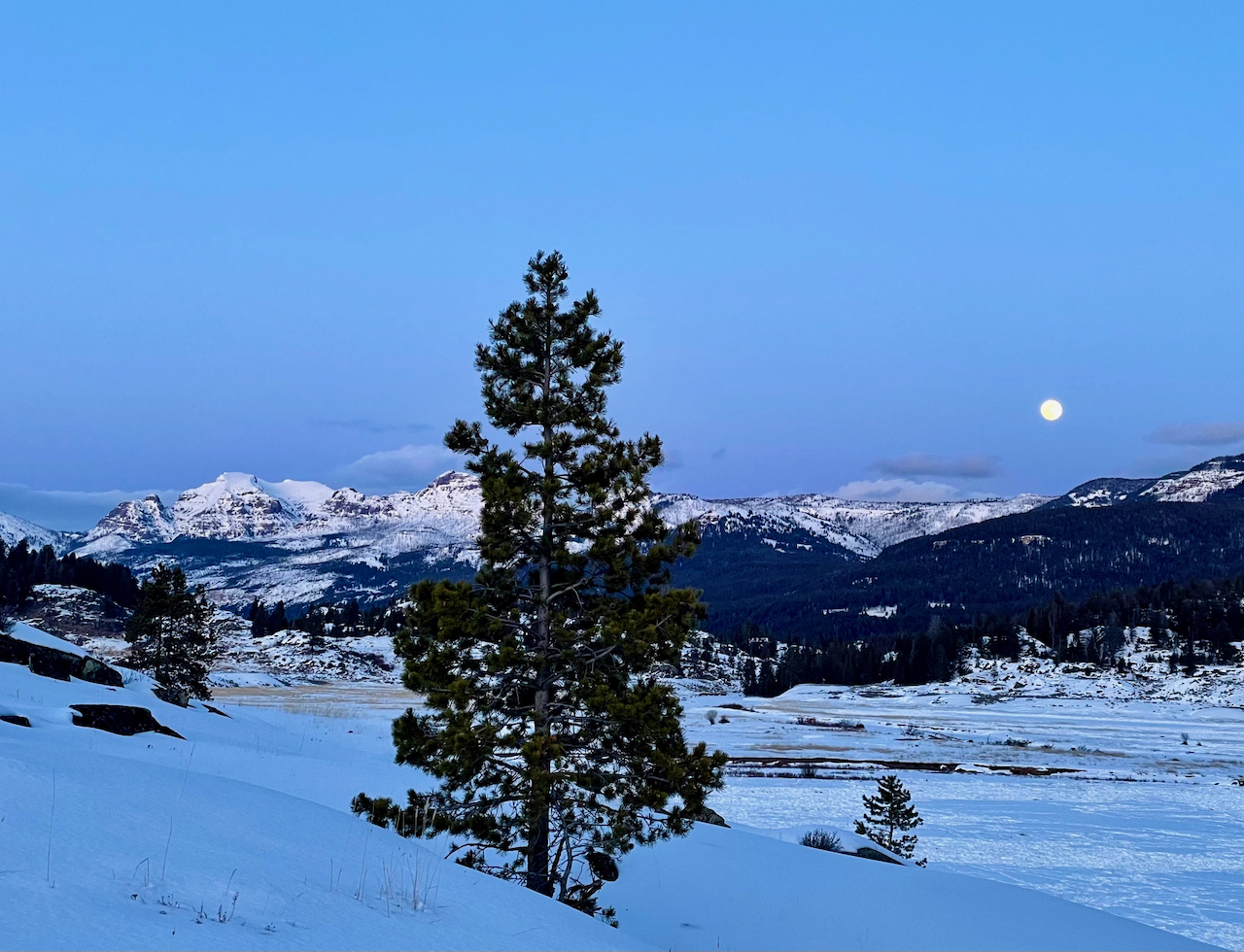
This week in Yellowstone National Park, from December 4th to December 10th, 2025, I will be talking a lot about what to do in the upcoming snowstorms that will be hitting the region all week. I’ll tell you a cool spot for potential moose sightings, give tips on how to scan for wildlife in the snowy weather, share a trail that is perfect for putting in miles and seeing a corner of the park that few now see, and even talk about a feature in Mammoth. I will also give you the complete weather forecast, the snowpack update, the wildlife report, and everything else you need to have an incredible time, “This Week in Yellowstone.”
LISTEN TO THIS AS A PODCAST
Apple: https://podcasts.apple.com/us/podcast/this-week-in-yellowstone-national-park/id1789397931
Spotify: https://open.spotify.com/show/41E5WWldz4s7n6NXh2Lahr
RSS: https://rss.com/podcasts/this-week-in-yellowstone-national-park/
Disclaimer: I may miss a few details, so please feel free to reach out with any questions. I also mention park locations casually—if you’re unfamiliar, a quick search can help. This report only covers drivable areas of the park.
Also, this podcast is a passion project. If you enjoy it, I’d love a review or a quick email! To support my work, check out my guidebooks on hiking and wildlife watching, or join me for a guided Yellowstone tour. For more information, visit outdoor-society.com or contact me directly.
THIS WEEK’S YELLOWSTONE NEWS
It is another slow news week in the park. For those asking about specifics about the fee increase I talked about last week, and those wondering how it will all be enforced, nobody currently has any idea. I will share more when I learn more. Like any new government announcement, there are very few actual details right away. We all just have to wait and see.
The only other news really worth sharing is that this is the last week of a truly empty park. Starting next week (December 15th), snowcoach tours will begin, and winter tourism officially kicks off. I’ll be talking about this more next week, but figured I would give a heads-up right now, since it is a slow news week in the park.
EXPERIENCE OF THE WEEK
Scanning for Wildlife in Round Prairie
Everyone knows Lamar Valley is a great spot for wildlife. I also constantly talk about Slough Creek and Little America as stellar spots in the northern range to see animals. However, I rarely mention Round Prairie. In fact, very few visitors to the park know of Round Prairie or know where it is, which is why I will not only tell you where it is, but also why I have chosen it as my experience of the week.
Round Prairie is found just east of Lamar Valley. As you drive east, past Soda Butte Cone and through the narrow canyon section just beyond the Trout Lake trailhead, you’ll get to the clearing where the old Pebble Creek Campground is. This is Round Prairie. For many, it is a quick place to drive through, or where they turn around when looking for animals in Lamar. However, the wildlife potential here is quite good and only gets better throughout the winter. Now that snow is actually falling and staying around, Round Prairie will become one of the most consistent places to see moose in the park. That could happen this week, next week, or next month. Even if the moose aren’t there, those who sit and scan from the handful of pullouts in Round Prairie will see bison, coyotes, and foxes. I also want to mention that the area is also great for scanning the surrounding mountains for mountain goats. I’ll talk about it more in the wildlife watch section, but plenty of mountain goats have been spotted here over the last week. You may also see ermine around here, as well as pygmy owls.
The best way to experience Round Prairie is two-fold. The first is the standard driving method, of stopping and scanning from every pullout. While you could just stop at one, changing angles really does help see more in the wide expanse. It also gives you a chance to see if that lump in the distance is an animal or just a rock or log. Once you have done that, I strongly encourage you to park at the Pebble Creek parking area and walk at least into the campground and back. Getting out here not only gives you a chance to listen for wildlife, but the farther you walk up the creek, the more magical the landscape becomes. I’ll be talking about that in a future episode, but trust me on this.
Now that I have told you where to go this week, my tip of the week ties directly into it.
TIP OF THE WEEK
Wildlife Watching During Snow
As of the time I am writing this, the forecast for Lamar Valley and Cooke City is calling for snow every day through the weekend. If that is the case, this makes wildlife watching much more difficult than on good weather days. However, there are some tips and tricks for making even the snowiest of days good wildlife watching days.
Now that snow is becoming more common across the northern range, you can use it to your advantage. In winter, wildlife tends to stand out more because of the contrast between dark fur and white snow. It is pretty obvious, but it needs to be said. When scanning, look along ridgelines, tree lines, riverbanks, and open meadows, places where animals naturally travel or feed. Wolves often move against slopes where they blend less, while bison and elk gravitate to areas where grazing is easier. Learning these hotspots saves you time and increases your chances of real encounters. The deeper the snow, the more logs and rocks will become covered, eliminating the thousands of animal-shaped objects that many of us stop and look at when searching for animals.
One thing I love about being in the park during or after a snowfall is the fresh tracks in the snow. Visible from the road or an overlook, the movements of wildlife in the snow help one not only see how active the park is with wildlife, but can also tell you if wildlife has been in the area recently. You might not follow them physically, but interpreting them can clue you into where to aim your binoculars or which direction to continue driving or hiking.
Speaking of binoculars, bring the best optics you can comfortably use. Snowy days often create low contrast, so a good pair of binoculars or a spotting scope makes all the difference, as your eyes will struggle to see as well as they normally do. Even inexpensive optics work better if you take a moment to clean the lenses and let them acclimate to the cold. Keep them under your jacket when you’re not using them to prevent fogging. Also, bring a microfiber lens cloth in case they are foggy or need to be cleaned.
Another key tip is to dress for long periods of standing still, espcially if there is a wolf pack or something off in the distance away from the comfort of your car. Wildlife watching often means lingering in cold conditions, which is when the chill sets in. A warm parka, insulated boots, hand warmers, and good socks go a long way. If you’re warm, you’ll stay patient, and patience is half the battle with winter wildlife scanning.
Now, I do want to be truthful here. In heavy snow, spotting wildlife can be much more difficult. I strongly suggest tamping down your expectations and just being happy with what you see. You may not see much if it is dumping. However, you should still be able to see bison and elk, which can be covered in snow during this time, making them even more impressive looking.
RANDOM YELLOWSTONE FACT OF THE WEEK
If you have been to Mammoth Hot Springs, there is almost no way that you missed seeing the feature known as Liberty Cap. While many will see it and quickly snap a pic before admiring the more active and colorful terraces in the area, the feature is unique and worth taking some time to appreciate. The name, Liberty Cap, dates back to 1871, when the Hayden Geological Survey visited the site. Members of that party thought the cone resembled the “Liberty caps,” soft conical caps associated with freedom and liberty during the French Revolution (and symbols used on early American coins), and so they named it Liberty Cap. For those curious, it did have a slightly more provocative and inappropriate name. While that name is not written down, is pretty easy to figure out a variation or 12 when looking at it.
Liberty Cap stands near the northern end of Mammoth Hot Springs and rises roughly 37 feet (about 11 meters) above the surrounding terrain. It’s not a volcanic pinnacle, but rather the remains of a long-active hot spring cone: for hundreds or even thousands of years, a single geothermal vent discharged mineral-rich water there. The water, heated by underground geothermal sources, carried dissolved calcium carbonate; as it surfaced, carbon dioxide escaped, and calcium carbonate precipitated out, layer by layer. Over time, those deposits built up into the travertine mound we now call Liberty Cap.
The cone likely formed around 2,500 years ago, according to geological dating of similar formations in the area. At some point, geologists aren’t certain exactly when, the spring’s plumbing changed: either the underground channel shifted, or the vent became sealed by continued mineral deposition, and the flow stopped. The once-active spring went dormant. Today, Liberty Cap is extinct; its surface has weathered over the decades, and plants like lichens and small grasses have colonized parts of it.
Even before the park was officially established, Liberty Cap was a landmark. When early visitors and surveyors came through Mammoth Hot Springs in the late 19th century, it was already a striking and unusual formation, rising out of the warming terraces and steam. As tourism grew and the area became managed, first under military oversight with what became Fort Yellowstone, later under the stewardship of the National Park Service, Liberty Cap remained a core feature of the lower boardwalk routes at Mammoth. In 1878, Superintendent Norris, fearing that the feature would topple over, braced it with timbers to ensure it remained erect. After some time had passed, everyone involved in this decision realized it would stand on its own, and the timbers were removed.
Geologically, Liberty Cap serves as a reminder of how dynamic Yellowstone’s thermal systems are. The broad Mammoth area hosts nearly 100 hot springs scattered across terraced travertine formations. The water comes from snow and rain seeping deep underground, where it’s heated by magma (or possibly a smaller local heat source), then resurfaces through fractures and fissures, sometimes for centuries in the same spot. Most spring-formed cones elsewhere remain small, only 1–2 meters, but Liberty Cap is a rare example of a cone that reached a significant size.
Today, Liberty Cap is inactive, but it remains one of the most recognizable and photographed landmarks at Mammoth Hot Springs. It marks the start of the boardwalk area that leads visitors through the lower terraces, colorful thermal features, and up toward the main terrace.
WEATHER FOR THE COMING WEEK
I am too lazy to type this out, so you’ll have to listen to the podcast to get it. Or just ask me.
SNOWPACK UPDATE
As of December 2nd, the snowpack is around 60% of normal for this time of year. Last year on this date, we were averaging around 65% of our normal level.
ROADS CONDITIONS
The only road open is the road between Gardiner, Montana, and Cooke City, Montana. Please be aware that this road can close at any time due to inclement weather.
For up-to-date information, call (307) 344-2117 for recorded information, or sign up to receive Yellowstone road alerts on your mobile phone by texting “82190” to 888-777.
CAMPING INFO
There is only one campground open in the park right now, and that is the Mammoth Campground, which is open year-round.
WILDLIFE WATCHING UPDATE
You have to listen to the podcast to get this information. Sorry.
Apple: https://podcasts.apple.com/us/podcast/this-week-in-yellowstone-national-park/id1789397931
Spotify: https://open.spotify.com/show/41E5WWldz4s7n6NXh2Lahr
RSS: https://rss.com/podcasts/this-week-in-yellowstone-national-park/
PICK UP A GUIDEBOOK
Love what you have heard on this podcast and want more information on wildlife watching? Get a copy of my wildlife-watching guidebook to the region! Available in both ebook and paperback formats, my book will help you spot wildlife like a seasoned local. Please consider buying a book directly from me, as I make next to nothing when they are sold on Amazon. Grab your copy now at outdoor-society.com!
TRAIL ALERTS AND UPDATES
There are no official trail alerts this week. Bears are still out, so always carry bear spray, have it readily accessible, and know how to use it.
TREK OF THE WEEK
The Washed-Out Road From Mammoth
With the weather for the coming week not really ideal for hiking, and with a snowpack not deep enough for snowshoeing or cross-country skiing, finding a hike where you can just walk and not constantly worry about footing is a little trickier. Luckily, there is a fun route near Mammoth that takes you to some scenic spots on an easy-to-follow route. This is also my standard “I don’t want a real hike, but I want some miles” adventure.
To do this hike, which is actually a walk on a paved road, you should park near the visitor center or post office in Mammoth. Once you are parked and ready to go, you have two choices. You can either walk down the road to the campground or follow the signs to the campground and take the short, but steep, trail down.
Once you reach the campground, whichever way you did, follow the main road and keep heading downhill on the old road. Pass through any barriers you encounter to the washout, as they are designed to stop cars, but not people. As you hike down the gradual hill, keep an eye out for elk, deer, bison, and the last of the lingering pronghorn. Also, keep an eye out for steam rising along the Gardner River. The steam is from the old Boiling River site. While hot water still flows from the earth into the river, the hot springs that were once a popular dipping spot for visitors are now gone, and the area is closed.
Once you get to the old parking area for the Boiling River, you’ll be walking along a section of road that traces the Gardner River. Keep an eye out for hawks and eagles, as well as magpies and any other birds still in the area. You are also now entering an area that is sometimes incredible for bighorn sheep sightings, so scan the hillsides for them. Follow the road as it traces the river downstream, and you’ll eventually reach a huge washout where you can no longer go any further along the road. Enjoy the view here and think about the rush of water that surged downstream in 2022, causing this washout and loss of road.
Once you have taken in the view and scanned the cliffs for wildlife, head back the way you came. The route will be around 6 miles total, with roughly 600 feet of elevation gain. You shouldn’t need any special footwear besides comfortable hiking boots or hiking shoes to walk in, but always bring extra layers, plenty of food and water, and bear spray. Be smart. Be safe.
NEXT WEEK
In next week’s episode, I’ll return with all of the information you need to have a good week in the park, including wildlife, weather, and trail updates.
Until then, happy trails!