 by
by 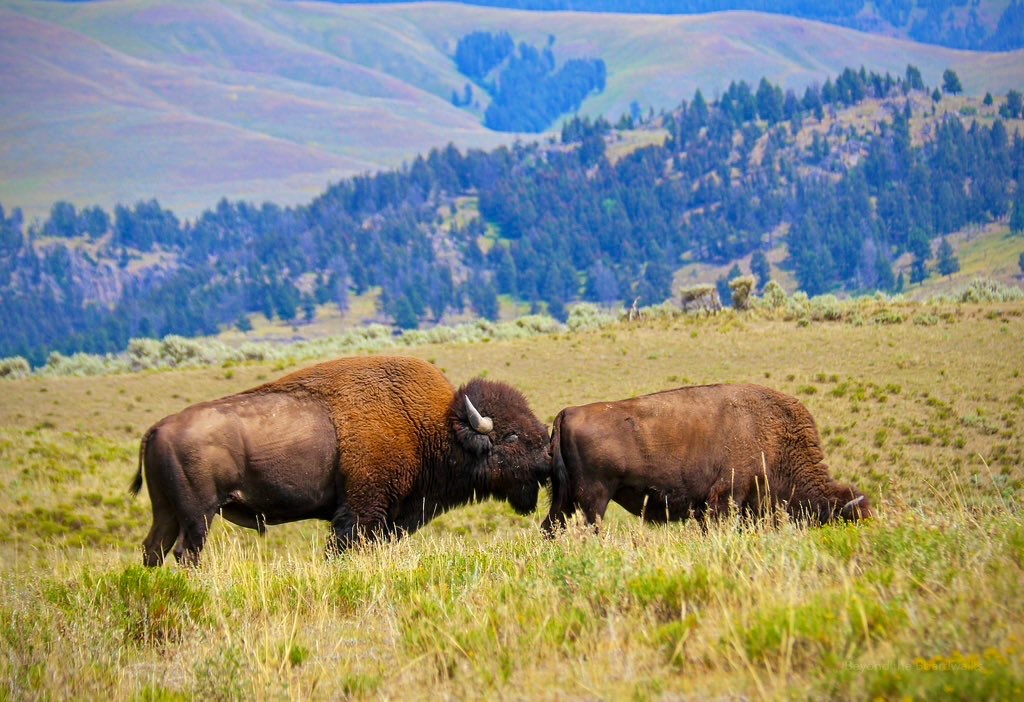
This week in Yellowstone National Park, from July 10th through July 16th, I share the June visitation statistics, let you know of a mountain to summit for all those hikers out there, give you a quick history of a side road between West Yellowstone and Old Faithful, and let you know of a lesser-known stunning view at the Grand Canyon of the Yellowstone. I will also give you the complete weather forecast, wildlife report, and everything else you need to have an incredible time, “This Week in Yellowstone.”
LISTEN TO THIS AS A PODCAST!
Apple: https://podcasts.apple.com/us/podcast/this-week-in-yellowstone-national-park/id1789397931
Spotify: https://open.spotify.com/show/41E5WWldz4s7n6NXh2Lahr
RSS: https://rss.com/podcasts/this-week-in-yellowstone-national-park/
Disclaimer: I might miss a few details, so feel free to reach out with questions! I also mention park locations casually—if you’re unfamiliar, a quick search can help.
Also, this podcast is a passion project—I’m not paid or sponsored. If you enjoy it, I’d love a review or a quick email! To support my work, check out my guidebooks on hiking and wildlife watching, or join me for a guided Yellowstone tour. For details, visit outdoor-society.com or reach out directly!
THIS WEEK’S YELLOWSTONE NEWS
June Visitation
Yellowstone National Park welcomed 928,250 recreation visits in June 2025, marking a slight 1% increase from June 2024, which saw 914,612 visits. However, this year’s June total was just under June 2021’s number of 938,845. While June visitation remained steady, overall 2025 numbers are trending upward. By the end of June, Yellowstone had hosted 1,690,922 recreation visits, which is a 4% increase from the same time period in 2024 and a 6% rise from the record visitation of 2021.
To put the trend in perspective, here are the year-to-date visit totals through June for the past several years: 1,690,922 in 2025, 1,633,739 in 2024, 1,492,843 in 2023, 1,258,834 in 2022 (a year impacted by a major flood closure), 1,587,998 in 2021, and just 719,054 in 2020 due to COVID-19-related shutdowns.
Despite recent growth, 2021 still holds the record for Yellowstone visitation, with more than 4.8 million visits that year. It will be interesting to see if 2025 can stay ahead of 2021’s numbers.
The Bison Rut
I mentioned it in great detail in last week’s episode, but the bison rut is upon us and will be picking up in the coming days and weeks in Hayden and Lamar Valleys. When traveling through these regions, traffic delays can be quite substantial, so be aware of that. Bison bulls will be much more aggressive during this time, so be alert at all times. Also, it should go without saying, but never approach a bison during the rut or not during the rut.
EXPERIENCE OF THE WEEK
Go Beyond Artist Point
Artist Point is one of the most breathtaking viewpoints in Yellowstone National Park, offering a dramatic overlook of the Grand Canyon of the Yellowstone. From this spot on the South Rim Drive, you’ll get a spectacular view of the 308-foot Lower Falls as it thunders into the deep canyon below. The cliffs around the river are painted in vibrant hues of yellow, red, and orange, creating a stunning natural canvas that draws visitors year-round. The short, paved path to the overlook is easy and accessible, making it a great stop for all ages and abilities. While many will take this trip, there is an added little trek that gives more adventurous hikers even more of an impressive view of the canyon.
Once you have enjoyed seeing the falls from Artist Point, walk to the Point Subline, Clear Lake-Ribbon Trail, and head downriver. Your journey won’t be long, but it will be extremely memorable and stunning. Your goal is to hike the trail to the Ribbon Lake-Artist Point Connector trail, just 3/4 of a mile away. While short, the trail will gain 200 feet in elevation on loose dirt, so be aware it’s not a flat, easy trail like the paved path at Artist Point.
Now, you may be wondering why I am telling you to hike this. The answer is simple: an unrivaled, raw, open view of the canyon. While you won’t see the waterfall from the trail, you will see an unobstructed view of the canyon and the river. There are no guardrails here. There are no safety precautions or signs, either. It is just you, the trail, and the edge of the canyon. Sure, you have good views elsewhere on the more established canyon rim trail and easy-to-reach spots, but this section feels more natural. It feels like the park probably felt before it was a park.
Now, I am recommending this knowing that some will say me sharing this spot is slightly irresponsible, as this area does have a much higher risk of an accident. However, I am trusting that readers understand the risks associated with standing on loose rocks and dirt near the rim of a canyon. Do not take any risks that will lead to a slide or fall, as it will probably lead to your death. Stay on the trail, enjoy the views, and be smart.
TIP OF THE WEEK
How To Find Parking at the Popular Spots
If you are visiting the park this week, chances are, you will encounter crowds and parking issues at the popular areas. Because of this, I will briefly give a few tips on how to avoid them. While I have talked about this in previous episodes, I sometimes feel the need to repeat myself, as the information is extremely relevant right now.
Earlier this week, I started a tour at the popular trailhead of Fairy Falls and Grand Prismatic. At 7 am, the parking area was so empty that I could have parked on the pavement right by the trailhead and not in the overflow parking lot. Because sunrise is currently around 6 am, it was already light out, and dozens of bluebirds were flying around and sitting in the trees. Only a handful of people were around.
By noon, when we returned from Imperial Falls, the parking lot was packed, with people parking on the road a mile from the trailhead to hike. As I stood by my car, changing shoes and having a snack, traffic stacked up as people waited for me to leave.
This scene plays out at every single popular spot in Yellowstone during the summer, but only during the day. In the early morning and evening hours, the park’s crowds thin out, and calm once again returns. That is why I am repeating myself and will continue to repeat myself. If you can, avoid the well-known “bucket-list” sights in Yellowstone from 9 am until 4 or 5 pm. If you really want to avoid what some call “Yellowstone’s Controlled Chaos,” wake up super early, or go places when everyone else is thinking about dinner. Trust me. It works and it is worth it.
RANDOM YELLOWSTONE FACT OF THE WEEK
The History of Firehole Canyon Drive
Between Madison Junction and Old Faithful, there is a sideroad that has been captivating drivers and visitors for nearly a century. Known for stunning river views, eroded lava rocks, and a few waterfalls and cascades, Firehole Canyon Drive is a road you need to check out when in this corner of the park.
Please note that trailers, buses, and RVs of any size are not permitted on Firehole Canyon Drive. Also, it is important to know that while most route descriptions do say that the Firehole Canyon has a swimming area, the area is closed this year, and might be closed for a long time. Some say it is closed because of the osprey nest right there, but even before the osprey nest was built by the birds, the park wasn’t always too thrilled about having to monitor and maintain this swimming hole. I wouldn’t be surprised if the swimming area never reopens, as it was a bit of a nightmare for park staff.
The road is short, just 2.2 miles in length, but it packs some very good views into its short length. Places like Rhinoceros Rock, the lower and middle Firehole cascades, and Firehole Falls will dazzle, while an osprey nest will give you a potential for some cool glimpses into the region’s airborne wildlife. While I could wax poetic about the highlights of the road, I want to share the history of this route, as it is quite unique.
In 1909, the US Army Corps of Engineers set out on a task to build a road through this canyon. A year later, they abandoned the mission, as the instability of the walls made their efforts seem pointless. For a decade and a half, the route was used sparingly, until the National Park Service decided, in 1925 and 1926, the park decided to fix it up and use it as a main road for those heading into the park. It opened to traffic in 1928, but was plagued by rock falls, requiring constant maintenance by park staff. In 1959, everything changed.
On August 17, 1959, at 11:37 pm, a magnitude 7.2 earthquake rocked the region, causing serious destruction. The earthquake caused a huge landslide, resulting in over 28 fatalities and leaving $11 million (equivalent to $119 million in 2024) in damage. The slide also blocked the flow of the Madison River, resulting in the creation of Quake Lake. It also did a lot more, but I will talk about that in August.
On Firehole Canyon Drive, the earthquake caused significant damage, resulting in the road being closed and a reroute, the current main road between Madison and Old Faithful, being opened in 1960. Once the canyon road was cleaned up, it was reopened as a single-lane side road that you can drive today.
WEATHER FOR THE COMING WEEK
Lamar Valley: This week, the weather in Lamar looks pretty good through the weekend. Expect highs in the 70s and low 80s, and lows in the upper 30s and 40s. There is a 15% chance of rain on Thursday and a 25% chance on Friday. The weather shifts on Monday. Highs will be in the 70s and lows in the 40s, with a 43% chance of thunderstorms and rain expected. Tuesday will be cooler, but the same. Wednesday, things look to calm down a little, with highs in the 70s, lows in the 40s, and a 25% chance of rain.
Gardiner: Things will be pretty calm in Gardiner this coming week. Expect highs in the 70s and 80s through the weekend, with lows in the 40s. Monday will have a high chance of thunderstorms and rain, then things relax on Tuesday and Wednesday, with only a 20% chance of rain.
West Yellowstone: West Yellowstone is going to be pretty consistent the next seven days. Expect highs in the 80s and lows in the 40s, with an increased chance of thunderstorms on Monday through Wednesday.
Cody: Expect highs in the 80s or low 90s on Thursday, and a low in the 50s. Friday will be much cooler, with a forecasted high of just under 70 and a low of 50. Saturday, Sunday, and Monday will have highs around 90, then Tuesday will be cooler. Expected highs in the 60s or 70s for Tuesday and Wednesday, with a decent chance of rain or thunderstorms.
SNOWPACK UPDATE
Not in this week’s episode. This will be back in October, probably.
ROADS CONDITIONS
All major roads and most side roads are open right now in and around Yellowstone National Park. This includes Dunraven Pass and the Beartooth Highway.
For up-to-date information, call (307) 344-2117 for recorded information, or sign up to receive Yellowstone road alerts on your mobile phone by texting “82190” to 888-777.
CAMPING INFO
Every campground in the park that is going to open this year is open. Pretty much all of them are full and have no opportunities to get a campsite if you don’t already have a reservation.
WILDLIFE WATCHING UPDATE
You have to listen to the podcast to get this information. Sorry.
Apple: https://podcasts.apple.com/us/podcast/this-week-in-yellowstone-national-park/id1789397931
Spotify: https://open.spotify.com/show/41E5WWldz4s7n6NXh2Lahr
RSS: https://rss.com/podcasts/this-week-in-yellowstone-national-park/
PICK UP A GUIDEBOOK
Love what you have heard on this podcast and want more information on wildlife watching? Get a copy of my wildlife-watching guidebook to the region! Available in both ebook and paperback formats, my book will help you spot wildlife like a seasoned local. Please consider buying a book directly from me, as I make nothing when they are sold on Amazon. Grab your copy now at outdoor-society.com!
TRAIL ALERTS AND UPDATES
Currently, as of the time of this recording, all trails that are supposed to be open in the park are open. Trails in the bear management areas are not included in that statement. All the information on trail conditions can be found on the Backcountry Conditions Page of Yellowstone National Park.
TREK OF THE WEEK
Avalanche Peak
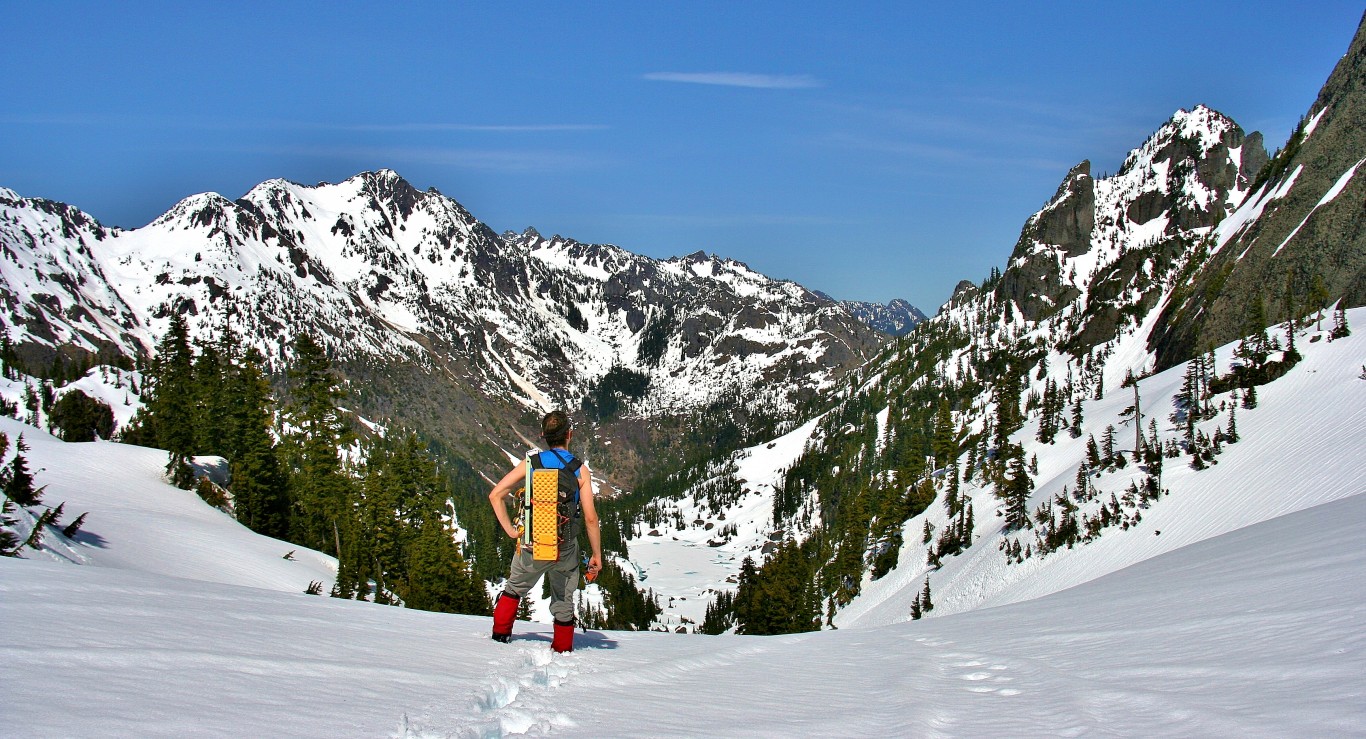
Avalanche Peak is one of Yellowstone National Park’s most rewarding high-country hikes, especially for those looking for a short but steep adventure with incredible summit views. Located near the East Entrance, this out-and-back trail is about 4.2 miles round trip, but don’t let the mileage fool you; the trail climbs roughly 2,100 feet over just a couple of miles, making it a serious workout from the very beginning.
The trail starts near the easy-to-miss Eleanor Lake, and within a few steps, you’ll be ascending through dense lodgepole pine forest. Early on, the path can be shaded and cool, especially in the morning, but that doesn’t last long. Soon the trees thin out, giving way to grassy alpine meadows and scattered wildflowers, a beautiful distraction from the steady climb. As you gain elevation, the views begin to open up, with glimpses of Yellowstone Lake and the vast Absaroka Mountains in the distance.
Above the tree line, the hike transitions into a wide open, windswept alpine slope, and the terrain becomes more challenging. The final push to the summit involves a stretch of loose, rocky scree and talus, a mix of gravel and broken chunks of rock that can shift underfoot. This section requires careful footing and patience, especially on the way down. While it’s not a technical climb, trekking poles can be very helpful here for stability. The trail also becomes more exposed, with steep drop-offs along certain portions of the ridge. It’s not a knife-edge trail, but those with a fear of heights might feel uneasy in places. Wind is almost guaranteed near the summit, so be prepared for strong gusts and cooler temperatures.
The summit of Avalanche Peak sits at around 10,568 feet, and from here, you’re rewarded with jaw-dropping panoramic views that include the Absarokas, Yellowstone Lake, Sylvan Pass, and even distant glimpses of the Tetons on a clear day. It’s one of those summits where you’ll want to take your time soaking it all in.
This hike is best done in mid-to-late summer, as snow can linger on the upper slopes well into July. Bring plenty of water, layers for wind and cold, and be prepared for afternoon thunderstorms, which are common at higher elevations. And as always in Yellowstone, stay bear-aware. Avalanche Peak is in prime grizzly country, so bring bear spray and hike in groups if possible.
If you’re up for a short, steep, and unforgettable alpine adventure, Avalanche Peak delivers. Just be ready to earn those sweeping summit views with some serious effort and some loose rock under your boots.
NEXT WEEK
In next week’s episode, I’ll return with all of the information you need to have a good week in the park, including wildlife, weather, and trail updates.
Until then, happy trails!