 by
by 
This week in Yellowstone National Park, from July 30th to August 5th, 2026, I hope to inspire you to go stargazing, talk about one of the oldest buildings in Yellowstone, and share some useful resources to help you see all the geysers erupt. I will also give you the complete weather forecast, a cool trail to hike, the snowpack update, the wildlife report, and everything else you need to have an incredible time, “This Week in Yellowstone.”
LISTEN TO THIS AS A PODCAST
The text below is my notes for the podcast. They may be incomplete.
Apple: https://podcasts.apple.com/us/podcast/this-week-in-yellowstone-national-park/id1789397931
Spotify: https://open.spotify.com/show/41E5WWldz4s7n6NXh2Lahr
RSS: https://rss.com/podcasts/this-week-in-yellowstone-national-park/
Disclaimer: I may miss a few details, so please feel free to reach out with any questions. I also mention park locations casually. If you’re unfamiliar, a quick search can help. This report only covers drivable areas of the park.
Also, this podcast is a passion project. If you enjoy it, I’d love a review or a quick email! To support my work, check out my hiking and wildlife-watching guidebooks, or join me for a guided hiking tour in Yellowstone’s backcountry. For more information, visit outdoor-society.com or contact me directly. Seriously though, come book a trail tour with me.
EXPERIENCE OF THE WEEK
Stay for Stargazing After Sunset
There is something magical about watching the sun disappear behind Yellowstone’s mountains. The day’s crowds begin to thin, the air cools, and the park settles into a quiet that feels completely different from the busy afternoons. Then, almost without realizing it, another show begins. One by one, the first stars appear, followed by hundreds more, until the entire sky seems to come alive. If you’re visiting Yellowstone in late July or early August, do yourself a favor and stay after sunset. Some of the park’s greatest scenery doesn’t reveal itself until darkness falls.
Most Americans rarely experience a truly dark night anymore. According to DarkSky International, more than 80 percent of the world’s population lives beneath skies polluted by artificial light, and in the United States and Europe, that figure exceeds 99 percent. Even more astonishing, roughly one-third of humanity can no longer see the Milky Way from where they live. Generations ago, the night sky was a familiar companion that helped people navigate, mark the seasons, and inspired countless stories and scientific discoveries. Today, for many people, only a handful of the brightest stars remain visible from home.
Yellowstone offers a chance to reconnect with that forgotten sky. With very little artificial lighting across its more than two million acres, much of the park enjoys exceptionally dark conditions. Once astronomical twilight ends, the Milky Way stretches overhead like a glowing river of light. Thousands of stars become visible to the naked eye, far more than most people have ever seen. On a clear night, you can often pick out satellites drifting overhead, meteor streaks flashing across the sky, familiar constellations, and even the hazy band of our own galaxy without any special equipment. The longer you stay outside, the more your eyes adapt to the darkness, revealing stars that simply weren’t visible when you first stepped out.
The timing works especially well during the end of July and beginning of August. Sunset doesn’t arrive until around 8:45 p.m., leaving plenty of time for an evening picnic, a short walk, or simply finding a quiet place to sit before darkness settles in. As the sky transitions from orange and pink to deep blue, Venus may appear low in the west while the first bright stars emerge overhead. By the time full darkness arrives, Yellowstone feels like an entirely different world.
The best part about stargazing in Yellowstone is that you really don’t have to venture too far. Once you leave your gateway town or hotel/camping complex, you only need to travel a few minutes to get into true darkness. Sure, an occasional car might drive by, but generally, you’ll be alone at a pullout and able to see the stars well. Just make sure you stay very close to your car, as animals are still roaming around, and move at night better than you ever could.
If you’re hoping for the darkest skies possible, it also helps to know when the moon rises. A bright moon can wash out fainter stars, while moonless evenings reveal the richest views of the Milky Way. On August 1, the moon rises at approximately 10:11 p.m. On August 2, moonrise is about 10:29 p.m. On August 3, it rises around 10:49 p.m. On August 4, moonrise is approximately 11:13 p.m., and on August 5, the moon rises at about 11:42 p.m. Those progressively later moonrises provide excellent opportunities to experience Yellowstone under naturally dark skies before the moon appears above the horizon.
One of my favorite things about stargazing in Yellowstone is how quickly it reminds you just how small we are. During the day, it’s easy to focus on the geysers, waterfalls, wildlife, and mountains. At night, your attention shifts upward to a universe that has been there all along. Suddenly, the same landscape you’ve spent all day exploring becomes part of something much larger.
If you’ve never experienced a truly dark sky, Yellowstone is one of the best places in America to do it. Stay a little longer after sunset. Let your eyes adjust. Put your phone away for a while. Chances are you’ll leave with memories of the stars that are every bit as powerful as the memories you made during the day.
TIP OF THE WEEK
Geyser Eruption Predictions
Few things are more frustrating than walking away from a geyser just minutes before it erupts. It happens all the time in Yellowstone. You wait for a while, decide it’s probably not going to happen, and continue down the trail, only to hear people cheering behind you a few moments later. The good news is that you don’t have to rely entirely on luck. Yellowstone offers eruption predictions for several of its most famous geysers, making it much easier to plan your day and spend more time watching geysers erupt instead of waiting around hoping you’ll be in the right place at the right time.
Most visitors know about Old Faithful, but it’s far from the only geyser with predicted eruption times. The National Park Service also provides predictions for several other popular geysers, including Grand, Castle, Daisy, Riverside, and Great Fountain. These forecasts are created using observations collected by park rangers and trained naturalists who monitor eruption intervals and compare them with each geyser’s well-documented behavior. Because geysers are natural hydrothermal features, the predictions are estimates rather than guarantees, but they are remarkably reliable. Old Faithful’s next eruption, for example, can usually be predicted within about 10 minutes by measuring the duration of its previous eruption, while the other geysers are typically given a broader prediction window because their eruption patterns vary more. The National Park Service continually updates these predictions throughout the day as new observations are made.
I also enjoy going to the Current Geyser Activity page on the Yellowstone National Park website. It serves as a great jumping-off point for a deeper dive on some of the other geysers in the park. While it appears to have not been updated since 2020, the information is still awesome and it’s worth a look.
If you’re already in the park, one of the easiest places to find the latest predictions is the Old Faithful Visitor Education Center. Current eruption times are posted inside, and the knowledgeable rangers can often answer questions about what the geysers have been doing that day. As you walk through the Upper Geyser Basin, you’ll also notice prediction boards near several of the major geysers. These signs are updated regularly, making it easy to decide whether to wait for an eruption or continue exploring the boardwalks until it’s closer to showtime.
You don’t even have to wait until you arrive at Old Faithful to start planning. The National Park Service posts current geyser predictions on the official Yellowstone website, and they’re also available in the free National Park Service App. If you plan to use the app, I always recommend downloading the Yellowstone content before entering the park. Cell service is limited across much of Yellowstone, and having everything stored on your phone ahead of time makes it much easier to check predictions wherever you are.
Taking a minute to look at the eruption schedule can completely change your Yellowstone experience. Instead of arriving just after a geyser erupts or giving up moments too soon, you can plan your walks around some of the park’s most spectacular hydrothermal displays. It doesn’t remove all of the mystery because nature still has the final say, but it certainly tips the odds in your favor. After all, it’s much more fun to spend your time watching a geyser blast boiling water hundreds of feet into the air than wondering if you just missed it by five minutes.
RANDOM YELLOWSTONE FACT OF THE WEEK
The Little Cabin in Mammoth
Tucked away at the edge of historic Fort Yellowstone is one of the most overlooked buildings in Mammoth Hot Springs. The Mail Carrier’s Cabin may be small, but it tells the story of a time when simply delivering the mail into Yellowstone was a rugged, multi-day journey through the wilderness.
Built around 1895, the cabin is believed to be the oldest surviving log structure in Mammoth Hot Springs and the only log building from the 1800s still standing in the area. While historians are not entirely certain who originally constructed it, the National Park Service notes that it was likely built in the mid-1890s and later became associated with the Yellowstone Park Association, one of the park’s earliest concessioners. Its rustic log construction contrasts with the more formal military buildings erected by the U.S. Army throughout nearby Fort Yellowstone, making it a unique piece of the area’s architectural history.
The cabin sits on the edge of the Mammoth Hot Springs Historic District, just outside the core of Fort Yellowstone. During the late nineteenth century, before rural mail delivery existed, contracted mail carriers transported letters and packages from the railroad depot in Livingston, Montana, to Mammoth Hot Springs and onward to Cooke City before making the return trip. The journey took several days over rough roads and mountain passes, making the cabin a welcome place to rest during an era when Yellowstone was far more isolated than it is today. Over the years, the building also housed concession employees and later National Park Service staff.
The cabin changed as the years passed. Around 1903, a kitchen and dining area were added to the rear of the original two-room structure. Additional improvements followed during the 1930s. During restoration work in the early 2000s, workers made a fascinating discovery beneath insulation installed decades earlier: newspapers reporting the Wright brothers’ historic 1903 flight at Kitty Hawk had been used inside the walls. Even more remarkably, although preservation experts once recommended demolishing the deteriorating building in the 1970s, it was ultimately preserved as part of the nationally significant Mammoth Hot Springs Historic District.
The Mail Carrier’s Cabin also makes an excellent starting point for exploring the rich history of Mammoth Hot Springs. From here, it is an easy walk past many of the preserved Fort Yellowstone buildings that served the U.S. Army during its management of Yellowstone from 1886 to 1918. The old officers’ quarters, guardhouse, chapel, bachelor officers’ quarters, and parade ground all remain remarkably intact, offering one of the finest collections of historic National Park Service and military architecture anywhere in the country. Together, these buildings tell the story of how the Army helped establish many of the conservation practices that eventually became the foundation of the National Park Service.
WEATHER FOR THE COMING WEEK
I am too lazy to type it all out, so you’ll have to listen to the podcast to get the weather forecast, or just contact me.
Apple: https://podcasts.apple.com/us/podcast/this-week-in-yellowstone-national-park/id1789397931
Spotify: https://open.spotify.com/show/41E5WWldz4s7n6NXh2Lahr
RSS: https://rss.com/podcasts/this-week-in-yellowstone-national-park/
ROAD CONDITIONS
No main park roads are closed now. There are a few spots of construction, but there should be minimal delays. While unlikely, be aware that roads can close at any time due to inclement weather.
For up-to-date information, call (307) 344-2117 for recorded information, or sign up to receive Yellowstone road alerts on your mobile phone by texting “82190” to 888-777.
CAMPING INFO
Everything is Open!
WILDLIFE WATCHING UPDATE
You have to listen to the podcast to get this information. Sorry.
Apple: https://podcasts.apple.com/us/podcast/this-week-in-yellowstone-national-park/id1789397931
Spotify: https://open.spotify.com/show/41E5WWldz4s7n6NXh2Lahr
RSS: https://rss.com/podcasts/this-week-in-yellowstone-national-park/
PICK UP A GUIDEBOOK
Love what you have heard on this podcast and want more information on wildlife watching? Get a copy of my wildlife-watching guidebook to the region! Available in both ebook and paperback formats, my book will help you spot wildlife like a seasoned local. Please consider buying a book directly from me, as I make next to nothing when they are sold on Amazon. Grab your copy now at outdoor-society.com!
TRAIL ALERTS AND UPDATES
The backcountry Conditions Page is updated! I have a link to it in the show notes. That site is the easiest way to check the status of a trail you want to hike.
Carry bear spray. Have it readily accessible and not in a backpack. Know how to use it.
TREK OF THE WEEK
Pine Creek Lake, Out of the Park
For many visitors, the Yellowstone adventure ends the moment they cross the park boundary. That’s a shame because some of the most spectacular hiking in the Greater Yellowstone Ecosystem begins just outside the national park. Stretching across nearly one million acres in Montana and Wyoming, the Absaroka-Beartooth Wilderness is home to soaring granite peaks, hundreds of alpine lakes, rushing waterfalls, and some of the finest trails in the country. Better yet, many of them see only a fraction of the visitors found inside Yellowstone. If you’re looking to trade crowded boardwalks for alpine solitude, Pine Creek Lake should be at the top of your list.
The hike begins at the Pine Creek Trailhead in Paradise Valley, about 20 miles south of Livingston in the Custer Gallatin National Forest. Almost immediately, you’ll understand why this is one of the area’s most beloved trails. The path follows Pine Creek through a shady forest filled with Douglas-fir and lodgepole pine while the sound of rushing water echoes through the canyon. Before long, you’ll arrive at Pine Creek Falls, a beautiful cascade that drops more than 100 feet into a narrow gorge. This first section is one of the busiest hikes in Paradise Valley, and for good reason. It’s relatively short, family-friendly, and rewards hikers with one of southwest Montana’s most impressive waterfalls.
Many people turn around at the falls, and there’s nothing wrong with that. However, those willing to continue will discover why Pine Creek Lake has become one of the premier alpine destinations in the Absaroka-Beartooth Wilderness.
Beyond the falls, the trail becomes noticeably steeper as it climbs through thick forest alongside Pine Creek. Several smaller waterfalls tumble through the canyon, and frequent openings in the trees reveal increasingly dramatic views of the surrounding cliffs. As the miles pass, the crowds begin to disappear, replaced by the quiet that makes designated wilderness so special. The round-trip hike to the lake is approximately 10 miles with about 3,400 feet of elevation gain, making it a strenuous day hike that rewards persistence with unforgettable scenery.
After the final climb, the forest suddenly opens and Pine Creek Lake comes into view. Resting at just over 9,000 feet in elevation, the lake occupies about 31 acres and reaches an impressive maximum depth of roughly 170 feet. Its remarkably clear water reflects the rugged granite walls surrounding the basin, creating one of the most photogenic alpine settings in southwest Montana. Montana Fish, Wildlife & Parks manages the lake as a high-elevation trout fishery, stocking Yellowstone cutthroat trout approximately every three years because natural spawning opportunities are limited in the lake.
If you packed a fishing rod, Pine Creek Lake offers an excellent opportunity to cast for native Yellowstone cutthroat trout. Anyone age 12 or older needs a valid Montana fishing license, along with a Conservation License and the required Aquatic Invasive Species Prevention Pass before fishing these waters. As with any Montana waterbody, anglers should also review the current fishing regulations before heading out, as seasons and limits can change.
For hikers who still have plenty of energy, the adventure doesn’t have to end at the shoreline. Experienced off-trail travelers sometimes continue above the lake toward the summit of Black Mountain, which rises prominently above the cirque. There is no maintained trail to the top, and the route involves steep talus slopes, route-finding, and scrambling over loose rock. It is best suited for experienced hikers comfortable navigating alpine terrain. Those who reach the summit are rewarded with sweeping views across the Absaroka-Beartooth Wilderness, Paradise Valley, and, on exceptionally clear days, distant portions of Yellowstone National Park.
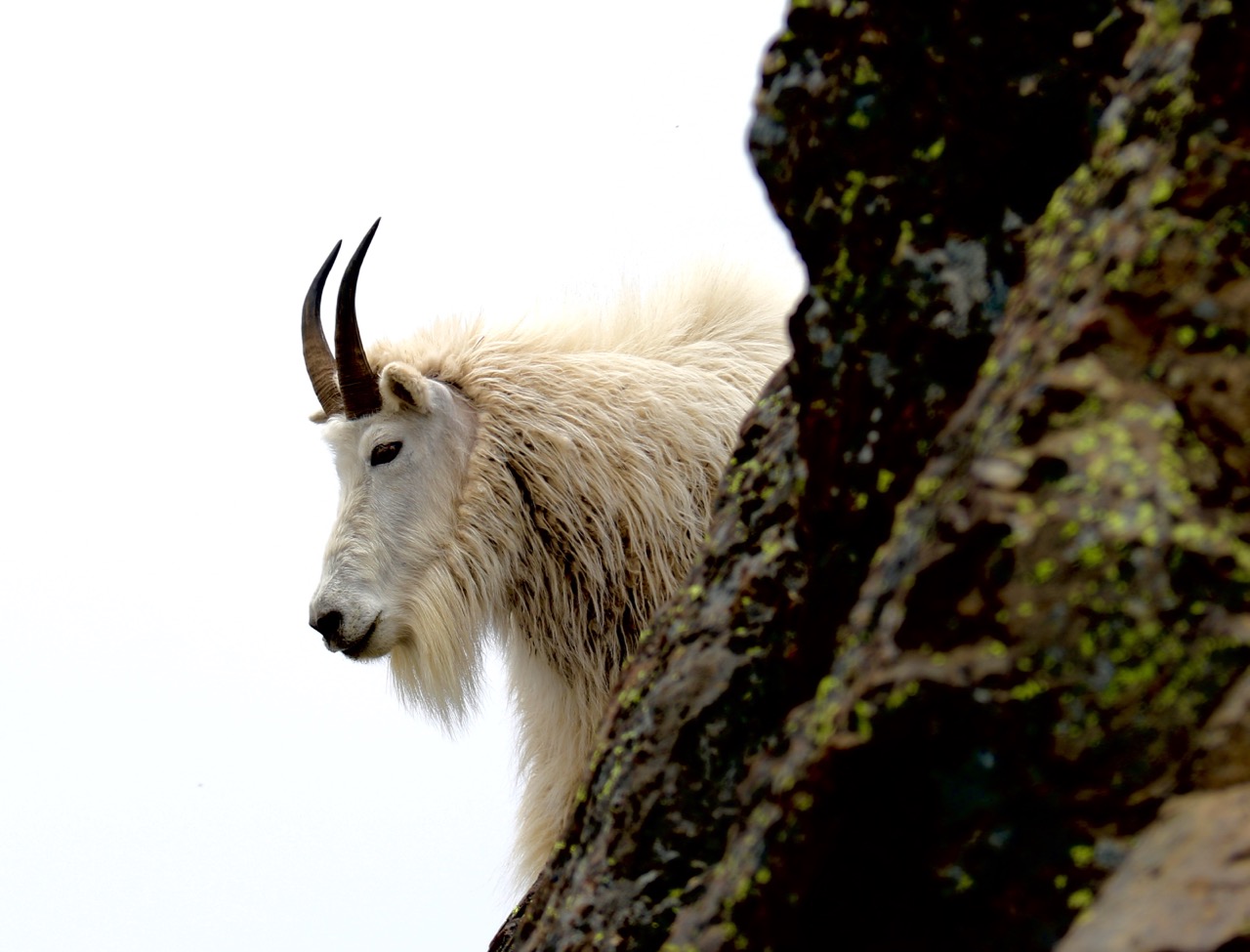
Whether you stop at the lake or continue toward Black Mountain, it’s impossible not to appreciate how wild this landscape remains. There are no railings, gift shops, or developed overlooks here. Instead, you’ll find alpine meadows, roaring creeks, towering peaks, and abundant wildlife. Elk, mule deer, mountain goats, black bears, and grizzly bears all inhabit the surrounding mountains, so carrying bear spray and knowing how to use it is essential. The U.S. Forest Service also encourages every visitor to practice Leave No Trace principles so this remarkable wilderness remains just as wild for future generations.
One of the best things about Pine Creek Lake is that it reminds you the Greater Yellowstone Ecosystem doesn’t end at the national park boundary. The same mountains, wildlife, forests, and wild character continue well beyond the entrance stations. If you’ve already experienced Yellowstone’s famous geysers and waterfalls, spend a day hiking into the Absaroka-Beartooth Wilderness. You may discover that one of your favorite memories of the region comes not from inside the park, but from sitting beside a crystal-clear alpine lake with the towering summit of Black Mountain reflected in its still waters.
NEXT WEEK
In the next episode, I’ll return with all of the information you need to have a good week in the park, including wildlife, weather, and trail updates. Until then, book a tour with me, pick up a guidebook of mine, and happy trails!